

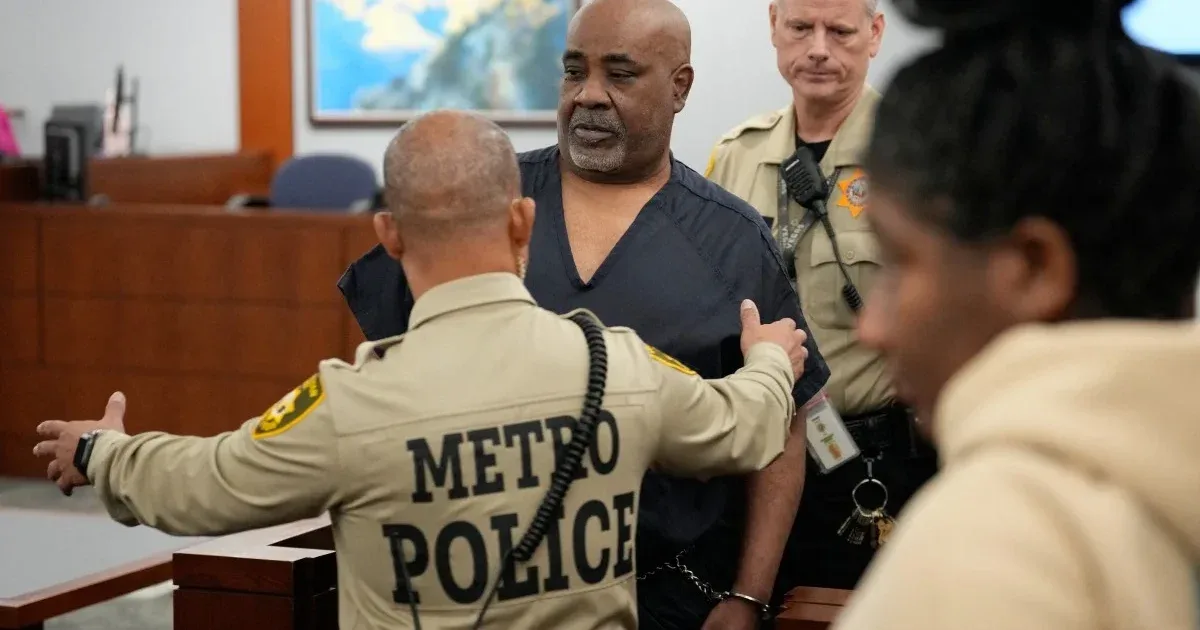
Prosecutors argued that Davis played a central role in organising the shooting, although he was not accused of pulling the trigger himself. They said he helped arrange the attack and supplied the firearm used by others in the vehicle.
Shakur was shot on September 7, 1996, while travelling in Las Vegas with Marion “Suge” Knight, the founder of Death Row Records. The rapper died in hospital six days later at the age of 25. Knight survived the attack.
Davis, a former leader of the South Side Compton Crips gang, became a central figure in the investigation after speaking publicly about his alleged involvement. His statements, interviews and 2019 memoir, Compton Street Legend, became important parts of the prosecution’s case.
Authorities had also questioned Davis during a confidential police interview in 2008 about the killing of fellow rapper Christopher Wallace, widely known as The Notorious B.I.G. Information he provided about Shakur’s murder later became relevant to the prosecution after his public accounts undermined the protections he believed the agreement offered.
Throughout the trial, Davis’s defence team challenged the reliability of his statements, arguing that he had exaggerated or fabricated accounts to gain attention and profit from the story. Davis has said he intends to appeal his conviction.
The case remained unresolved for decades, fuelling speculation about who was responsible for the killing. Davis was the only person charged in connection with Shakur’s murder, and the conviction represented a major development in a case that had long drawn international attention.
Shakur was widely regarded as one of hip-hop’s most influential artists. His music and cultural impact have endured since his death, with his murder continuing to shape discussions about violence, rivalry and the history of American rap.
Reporting by TalkNaijaMedia




Reader Comments (0)
No comments yet. Be the first to share your perspective on this report.