

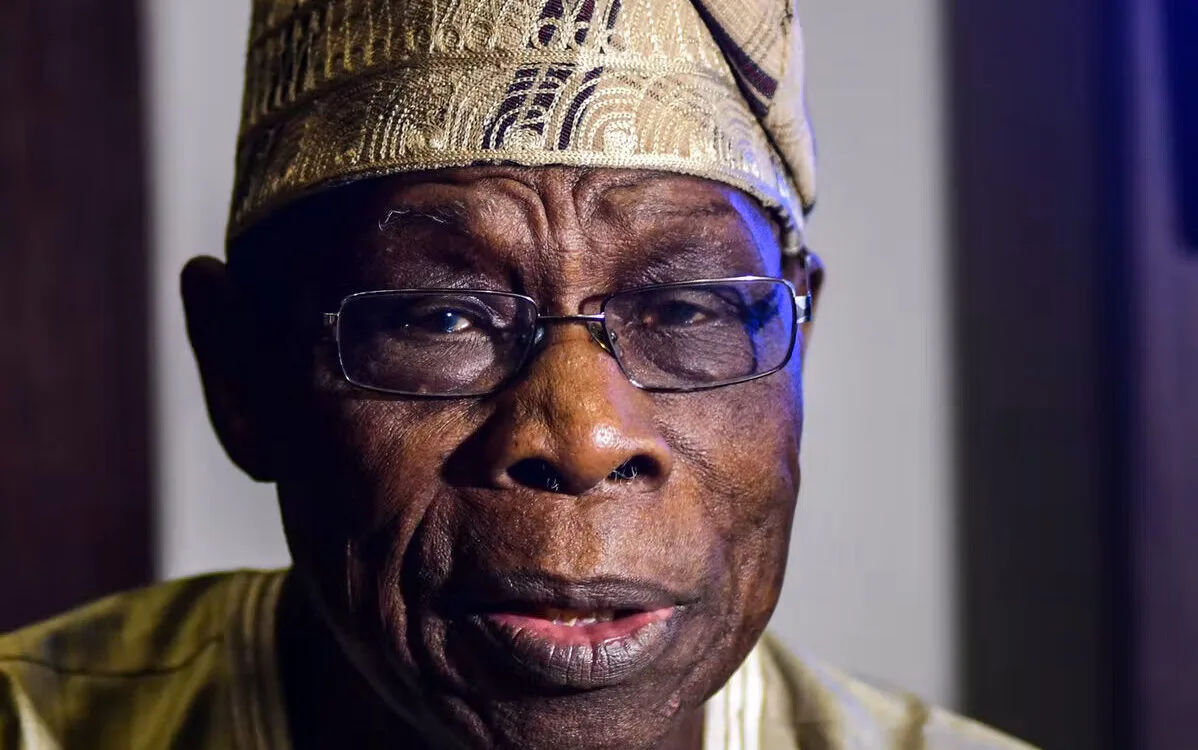
Former President Olusegun Obasanjo has called on survivors and families affected by the 1967 Asaba Massacre to embrace forgiveness and reconciliation, nearly six decades after the tragedy that occurred during the Nigerian Civil War.
Obasanjo made the appeal virtually on Wednesday while serving as chairman of the occasion at the 59th anniversary memorial held in Asaba, Delta State.
He described the massacre as one of the darkest and most painful episodes of the civil war, saying the conflict itself was a tragedy that should never have occurred.
The former president also disclosed that he was deeply moved after receiving documents relating to the massacre from Chief Chuck Nduka-Eze, the Isama Ajie of Asaba and convener of the Asaba Massacre Memorial.
Obasanjo urged the Asaba community and other Nigerians to pursue forgiveness while ensuring that the lessons of the tragedy are not lost.
His appeal, however, was met with a call for further acknowledgement and accountability from the Asagba of Asaba, Prof. Epiphany Azinge.
Azinge said forgiveness was possible, but insisted that the community could not simply erase the memory of the killings. He maintained that meaningful closure would require a formal public apology from a sitting President of Nigeria.
The traditional ruler noted that former military Head of State, retired General Yakubu Gowon, had apologised while out of office, but argued that an apology from a sitting president would carry a different significance for the people of Asaba.
Azinge also questioned the broader call for a “never again” approach, pointing to the Odi killings during Obasanjo’s tenure as President.
Despite his demand for a presidential apology, the Asagba made a notable reconciliation gesture at the memorial by publicly declaring that the Asaba community had forgiven the family of late Colonel Ibrahim Taiwo, who was associated with the military operation during the massacre.
The declaration followed an apology from retired Major General Ahmed Taiwo, the late colonel’s son, who expressed regret on behalf of his father and family over actions or omissions that contributed to the tragedy.
The 1967 Asaba Massacre took place during the Nigerian Civil War after Federal troops entered Asaba in October 1967. Historical accounts differ on the precise number of people killed, although community records, researchers and memorial organisers have placed the death toll at hundreds and, in some estimates, more than 1,000.
Speaking through the Delta State Secretary to the Government, Dr Kingsley Emu, Governor Sheriff Oborevwori said the killing of unarmed civilians could never be justified.
The governor also pledged continued support for efforts to secure national recognition of the massacre and establish a permanent memorial dedicated to the victims.
Oborevwori further disclosed that the Federal Government was expected to make a formal reconciliation declaration concerning the tragedy. He said official acknowledgement would be important to the reconciliation process, noting that Delta State had already recognised the massacre.
Chief Nduka-Eze said preparations were already underway for the 60th anniversary memorial scheduled for next year, with efforts continuing towards establishing a permanent Asaba Massacre Memorial Centre.
He said the anniversary would provide another opportunity to preserve the history of the tragedy and ensure that its lessons reach future generations in Nigeria and beyond.
The memorial also featured calls for remembrance, restitution and reconciliation from other traditional and community leaders, including the Obi of Onitsha, Igwe Nnaemeka Achebe.
As preparations begin for the 60th anniversary, the debate surrounding the Asaba Massacre continues to centre on how Nigeria can combine remembrance, acknowledgement, forgiveness and reconciliation without losing sight of the historical suffering of the victims and their families.
Reporting by TalkNaijaMedia


Reader Comments (0)
No comments yet. Be the first to share your perspective on this report.