

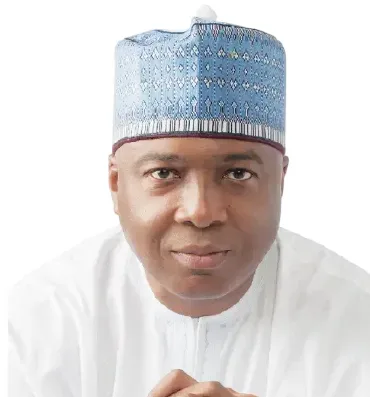
The judgment was read by Justice Ridwan Abdullahi on behalf of Justices Gabriel Omoniyi Kolawole and Abdu Dogo.
The appellate court faulted the prosecution’s evidence, noting that the witnesses’ statements did not demonstrate that Saraki’s comments had caused any breach of public peace. According to the court, the evidence mainly showed that some witnesses were displeased with the former Senate president’s remarks.
The court also rejected the argument that the laws cited in the charge, including the Administration of Criminal Justice Act, the Kwara State Penal Code and relevant cybercrime and cyberbullying provisions, were intended to protect individuals from comments they found offensive.
It stressed that criminal laws should not be used simply to prosecute people for making statements that upset or displeased those being criticised.
The panel further warned that although federal and state attorneys-general possess broad powers to institute criminal proceedings, such authority must be exercised within the limits of the law. It said prosecutorial powers should not be used to oppress individuals, prejudice their interests or violate their fundamental rights.
Consequently, the court ruled that the case filed against Saraki at the Kwara State High Court could not stand because the charge failed to disclose an offence or establish the statutory requirements necessary to support the allegations.
The dispute originated from comments Saraki published on social media and in a newspaper on April 17, 2026. In the publication, he questioned whether AbdulRazaq had completed secondary school and suggested that the governor’s educational background was affecting his judgment.
The Kwara State Government subsequently accused Saraki of criminal defamation and cyberbullying, arguing that the publication was capable of disturbing public peace.
Saraki challenged the proceedings, maintaining that his comments were part of his right to freedom of expression and a response to matters of public interest.
Reacting to the appellate court’s decision, Saraki said the ruling reinforced his belief that political authority should not be used to silence dissenting voices.
He expressed appreciation to the judiciary, saying he was grateful that the courts had continued to uphold justice. He also maintained that the judgment would not stop him from commenting on issues affecting the public, including questions surrounding the governor’s educational qualifications.
Saraki added that he would restate his position if necessary and would continue to speak on matters he considered to be in the public interest.
The ruling is limited to the criminal defamation and cyberbullying case arising from Saraki’s comments about AbdulRazaq’s educational background.
It is separate from the 20-count case involving Saraki, former Kwara State Governor Abdulfatah Ahmed and two former aides over allegations connected to the 2018 Offa robbery.
Saraki and the Peoples Democratic Party have described that separate prosecution as politically motivated, while the Kwara State Government and the All Progressives Congress have defended it as a lawful case arising from allegations linked to the robbery.
Reporting by TalkNaijaMedia


Reader Comments (0)
No comments yet. Be the first to share your perspective on this report.