

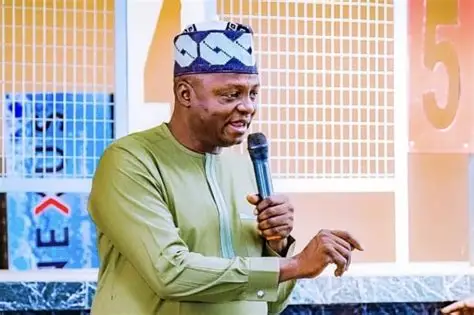
The delegation was led by former Sierra Leone Vice-President, Victor Bockarie Foh.
According to a statement issued by his media aide, Abimbola Tooki, Yilwatda said the APC had approximately 13 million registered members across the country and more than 261,000 executive members operating at different levels of the party.
He maintained that the party's membership database, identification system and organisational structures gave it a wider reach than its political rivals, describing the APC as approximately three times larger than its closest competitor.
The chairman said the party maintained executive structures from the ward level through local governments and states to the national level, providing a network for grassroots mobilisation, political coordination and electoral planning.
Yilwatda also highlighted the APC's representation in government, claiming that it had 31 governors, 88 senators and 208 members of the House of Representatives.
He said the party's elected officials, alongside its youth, women and persons with disabilities support groups, formed an extensive network capable of connecting government policies with communities across the country.
The APC chairman further disclosed that the party had inaugurated its campaign council, commenced preparations and uploaded its candidates to the Independent National Electoral Commission's portal ahead of the elections.
He urged INEC to follow its published electoral timetable and ensure that all political parties were treated equally throughout the process.
Yilwatda stressed that the electoral process must remain fair, transparent and predictable, warning against changes to deadlines that could give any political party an unfair advantage.
He said the APC was relying on its organisational capacity, nationwide structures and candidate readiness rather than assuming that its electoral victory was guaranteed.
Speaking during the meeting, the head of the ECOWAS delegation, Foh, said the mission was assessing Nigeria's political environment ahead of the 2027 elections.
He explained that the team would engage relevant political stakeholders and rely on verified information, systematic observation and credible data in preparing its findings and recommendations.
The engagement forms part of the regional body's efforts to assess the political environment and support the conduct of peaceful, credible and transparent elections in Nigeria.
INEC has scheduled the presidential and National Assembly elections for January 16, 2027, while governorship and State Houses of Assembly elections are fixed for February 6, 2027.
With preparations gathering momentum, political parties are expected to intensify their mobilisation and campaign activities ahead of the polls.


Reader Comments (0)
No comments yet. Be the first to share your perspective on this report.