

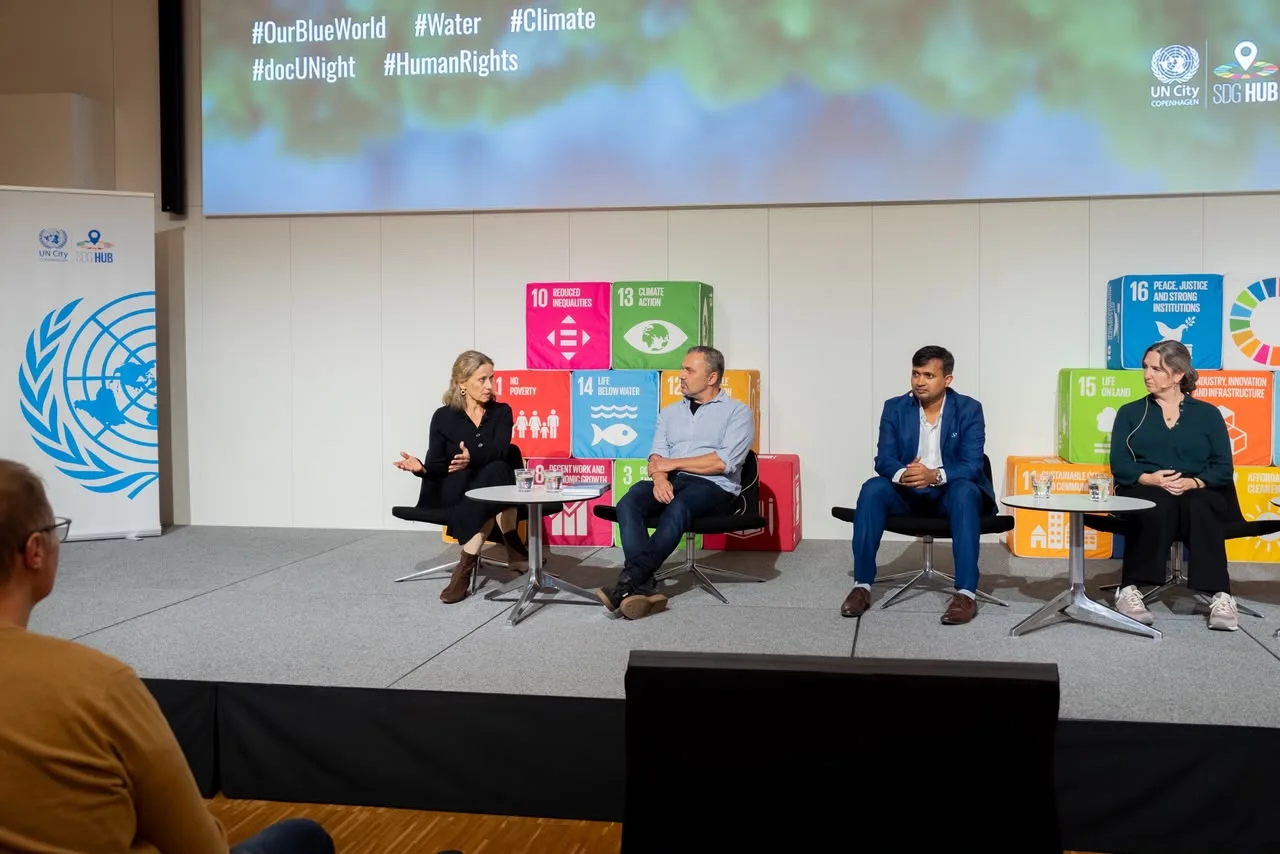
The exhibition featured artworks, photography, panel discussions and community experiences from areas including Argungu. It highlighted how unreliable water infrastructure affects women’s health, menstrual hygiene, privacy and ability to participate in economic activities.
During a panel discussion on gender and governance, advocate Patricia Emmanuel said women should have a stronger role in decisions concerning water resources, arguing that those who bear much of the burden of water collection should also help determine how water systems are managed.
Other participants criticised approaches that limit women’s participation to workshops and consultation sessions without giving them influence over policies, resource management or public spending.
Flora Asieri called for institutional changes that would allow women to contribute directly to decisions rather than remain participants in discussions that produce little practical change.
Sarah Brun, Head of the UN Women Nordic Liaison Office, also highlighted the relationship between visibility, political influence and funding. She argued that communities and issues that receive insufficient attention are often overlooked when budgets and development priorities are determined.
The event was attended by UNFPA Nordic Representative Ulla E. Muller, Nigeria’s Ambassador to Denmark, Sweden and Finland, Lola Akande, and Lokoja Dialogues co-founders Polly Alakija and Adwoa Edun, among other participants.
In her opening remarks, Alakija said her experience in Nigeria over the past 37 years had shown her the growing challenges surrounding equitable access to water. She stressed that the daily experiences of women and affected communities should inform government spending, infrastructure planning and the management of water services.
The organisers said the exhibition was designed to bring community experiences into conversations with policymakers and development partners, with the aim of encouraging more inclusive water policies and strengthening water security.
The discussions also underscored the need for institutions to recognise women not only as people affected by water shortages but also as leaders whose knowledge and experience can help shape sustainable solutions.
Reporting by TalkNaijaMedia



Reader Comments (0)
No comments yet. Be the first to share your perspective on this report.