

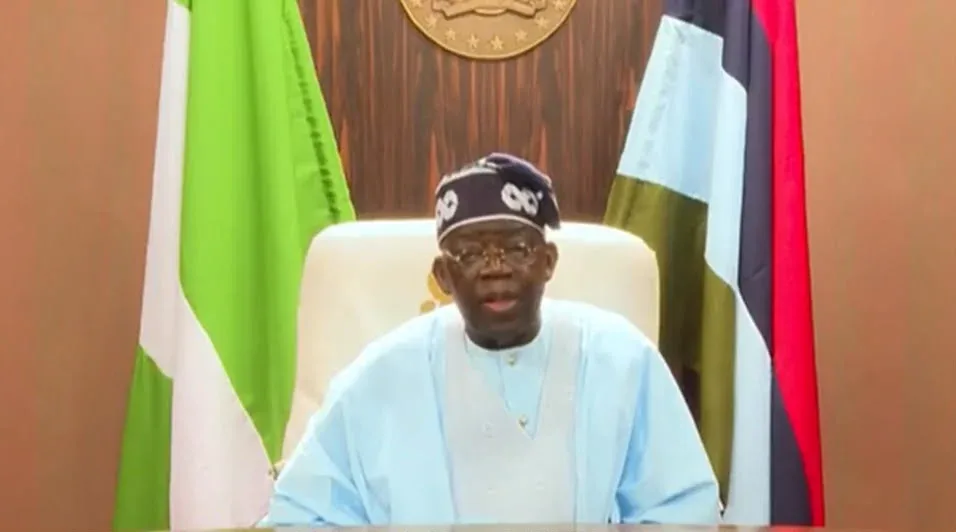
President Bola Ahmed Tinubu has declared that his administration has moved beyond the initial phase of economic reforms and is now concentrating on translating those measures into improved living conditions and shared prosperity for Nigerians.
The President made this known in his 66th Independence Day address delivered to the nation on Thursday, October 1, 2026, where he outlined key achievements and policy priorities covering economic growth, agriculture, employment, social protection, education, consumer credit and national security.
According to Tinubu, the early stages of his administration were focused on addressing longstanding structural weaknesses in the economy, even though the decisions required difficult adjustments and sacrifices from Nigerians. He maintained that the reforms were necessary to establish a more sustainable economic foundation.
The President said Nigeria recorded economic growth of more than four per cent in 2026, with contributions from both the oil and non-oil sectors. He also pointed to improvements in foreign reserves, declining inflation from its peak and greater stability in the foreign exchange market.
Tinubu further disclosed that non-oil export earnings exceeded $6 billion in 2025, describing the development as evidence of growing activity beyond the country's traditional dependence on crude oil.
On the cost of living, the President identified reducing the cost of production and transportation as a major priority. He said the government was pursuing measures to improve agricultural productivity through mechanised irrigation, dry-season farming and better access to farm inputs.
He also highlighted investments in roads, railways, ports and electricity infrastructure, explaining that improvements in these areas were expected to reduce business operating costs and ease the financial pressure on households.
Addressing employment and youth development, Tinubu said his administration intended to make job creation, entrepreneurship and industrial expansion central to national economic planning. He identified gas-powered industries, factory revival, digital connectivity and skills development as important areas for expanding opportunities for young Nigerians.
The President also spoke about social protection, saying the government was updating the National Social Register to improve the identification of vulnerable households and ensure that direct assistance reaches those who need it. He added that timely payment of salaries and pensions remained part of the administration's commitment to protecting workers and households.
On consumer financing, Tinubu highlighted the Nigerian Consumer Credit Corporation, known as CREDICORP, as part of efforts to expand access to credit for working Nigerians. He said the initiative was intended to make it easier for eligible beneficiaries to acquire essential assets, including vehicles, solar power systems and digital devices, through structured credit arrangements rather than having to save for extended periods.
Education also featured prominently in the address, with the President identifying the Nigerian Education Loan Fund (NELFUND) as an important intervention for improving access to higher education. He said the programme was designed to reduce financial barriers and provide students from low-income households with opportunities to pursue tertiary education.
On national security, Tinubu cited the reduction in oil theft as one of the developments recorded under his administration. He commended the Armed Forces and other security agencies for their efforts to protect the country's resources and maintain national stability.
The President also defended the removal of fuel subsidies and other economic reforms, describing them as difficult but necessary decisions. Using the analogy of administering morphine to mask an underlying problem, he argued that previous economic approaches had failed to address the structural challenges affecting the country. He said his administration chose to confront those problems directly rather than continue with measures he described as temporary relief.
Tinubu concluded by urging Nigerians to remain united, disciplined and committed to the country's future. He acknowledged the sacrifices associated with the reform process but maintained that they were intended to create a stronger economic foundation and a more resilient nation.
His address placed particular emphasis on the transition from economic stabilisation to wider prosperity, with the administration expected to focus increasingly on productive industries, employment, infrastructure, social protection and opportunities for citizens.
However, the impact of these commitments will ultimately be measured by how effectively they translate into lower living costs, more jobs, improved public services and better living conditions for Nigerians.
Reporting by TalkNaijaMedia



Reader Comments (0)
No comments yet. Be the first to share your perspective on this report.