

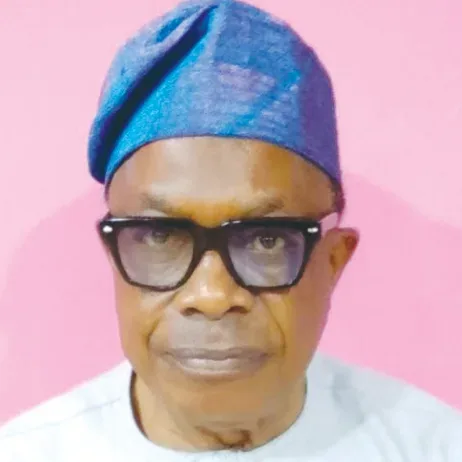
The former senior police officer said Nigeria could not adequately address its security challenges by relying exclusively on a centrally managed police force. He argued that officers who understand local languages, cultures and customs would be better positioned to gather intelligence, build relationships with residents and respond to community-specific threats.
Adeoye disclosed that state policing had been among the reforms he hoped to promote during his career, adding that he believed the country should have moved towards decentralisation much earlier.
However, he acknowledged concerns that governors could misuse state police to intimidate political opponents, journalists and government critics. He proposed constitutional safeguards and an independent judiciary to address disputes between state governments and police authorities.
Adeoye expressed support for governors exercising direct control over state police, on the grounds that they are responsible for security within their respective states. He nevertheless argued that independent oversight would be necessary to prevent abuse and ensure that disagreements between governors and police commissioners could be resolved fairly.
On the appointment of state commissioners of police, he recommended that governors should nominate or appoint candidates, subject to approval by an appropriate police oversight body. He also proposed a unified Police Service Commission framework to handle disciplinary matters and complaints involving officers at different levels.
His suggestions come amid ongoing efforts to establish state police through constitutional reform. The proposed arrangement has generated debate over how to balance local control with national standards, professional independence and protections against political interference.
Adeoye said federal and state police responsibilities should be clearly separated, with each service concentrating on offences within its legal jurisdiction. Where investigations involve multiple states, he suggested that a central coordinating authority should facilitate joint investigations and clarify responsibilities.
He also opposed automatically converting existing state-backed security groups into police forces. According to him, policing requires more than carrying out security duties; it involves professional investigation, intelligence gathering and specialised training. He suggested that some members of existing outfits could instead be retrained for other appropriate security roles or considered for recruitment where they meet the required standards.
Adeoye further argued that the Federal Capital Territory should not be excluded from decentralised policing. He maintained that the territory’s population and size justified a policing arrangement that responds more directly to local needs, and suggested that the FCT should have a form of local administration with greater responsibility for security.
On recruitment, the retired DIG proposed a minimum Senior Secondary School Certificate Examination qualification for recruits, while recommending a university degree or Higher National Diploma for cadet officers. He also called for states to cooperate in running police training institutions and sharing professional expertise.
Adeoye said police funding should be strengthened through more predictable revenue arrangements rather than relying solely on annual budget allocations. He also called for a review of the national revenue allocation formula to ensure states have adequate resources to maintain effective policing, with additional funding where necessary.
On accountability, he recommended retaining disciplinary procedures within the police system while strengthening the role of the relevant service commission in serious cases, particularly allegations involving human rights violations. In his view, independent investigation and oversight would be essential to building public confidence in state police.
The former police chief urged Nigeria to learn from policing practices in countries such as Canada, India, the United Kingdom and Singapore. He emphasised the importance of recruiting experienced instructors, improving police training and giving personnel posted to training institutions greater professional recognition and incentives.
He criticised the practice of treating postings to police training schools as punishment, arguing that training institutions should be staffed by capable officers selected for their expertise. He also advocated the use of experienced retired officers to strengthen instruction and professional development.
Adeoye said decentralisation could eventually change the existing police leadership structure, reducing the need for some of the current national command positions. He proposed that state police commands be headed by commissioners, while civilian administrators and suitably qualified officers could handle policy and administrative duties within the Ministry of Police Affairs and relevant oversight bodies.
His proposals add to the national debate over the future of policing in Nigeria, particularly the need to improve local responses to insecurity without allowing political interests to undermine law enforcement.
The proposed state police framework is not yet fully operational. Its implementation depends on the constitutional amendment process and the development of legislation and safeguards governing recruitment, funding, jurisdiction, discipline and oversight.
Reporting by TalkNaijaMedia


Reader Comments (0)
No comments yet. Be the first to share your perspective on this report.