

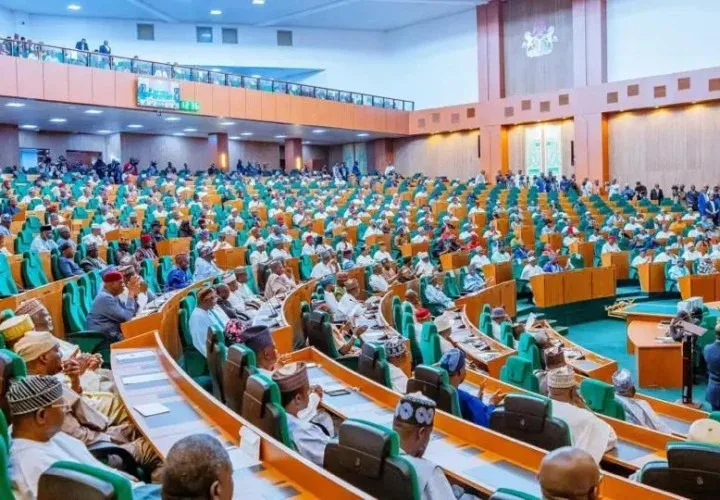
The committee, presided over by its Deputy Chairman, Jeremiah Umaru, maintained that public funds allocated to one government institution should not be used to meet another institution’s financial obligations without clear conditions governing the transaction.
Umaru said the committee wanted the finance minister and accountant-general to appear personally and commit to a definite repayment date, stressing that the investigation could not be concluded without an agreed timeline.
The lawmakers warned that the use of UBEC funds for other financial obligations could disrupt the commission’s programmes and affect states and federal constituencies that depend on its support to improve basic education.
Members also questioned reports that some government agencies were losing as much as half of their revenues through monthly or quarterly deductions without a clearly established regulatory framework. They expressed concern that such deductions could leave agencies struggling to pay salaries and finance essential operations.
Responding on behalf of the Accountant-General’s Office, Deputy Director Ezeoke Christopher acknowledged the financial arrangements, describing them as internal measures to address funding gaps and meet statutory obligations. He reportedly cited pressure from personnel costs, which he said exceeded ₦1 trillion monthly.
The office also told the committee that efforts had been made to refund as much as ₦90 billion, while more than ₦70 billion remained outstanding. However, the explanations provided by Christopher and the Finance Ministry’s Permanent Secretary, Muhammed Danjuma, did not satisfy the lawmakers.
The committee insisted that the two senior officials must appear in person to account for the outstanding amount and present a firm repayment plan.
During the hearing, UBEC Executive Secretary Olajumon Akinyemi also briefed lawmakers on the status of state counterpart funding. He said more than 20 states accessed their matching grants in 2025, while over 13 states had accessed theirs in 2026.
Akinyemi identified Imo, Ogun, Anambra, Lagos, Kwara and Katsina as states with outstanding issues relating to counterpart funding, while noting that several states were taking steps to meet the requirements.
He further disclosed that proposed amendments to the Universal Basic Education Act were before the National Assembly. The proposed changes would empower UBEC to redeploy funds that remain unaccessed by states for two years, helping to prevent education resources from remaining unused indefinitely.
The committee resolved that Oyedele, Ogunjimi and Akinyemi should appear on October 22 to address the repayment dispute and related funding concerns.
The investigation highlights continuing questions about the management of public finances and the need to protect money allocated to statutory institutions. For UBEC, predictable access to funding is essential to supporting basic education programmes and ensuring that federal interventions and state counterpart contributions are put to their intended use.
The committee said its intervention was aimed at improving financial accountability and ensuring that public resources earmarked for education are properly managed.
Reporting by TalkNaija Media



Reader Comments (0)
No comments yet. Be the first to share your perspective on this report.