

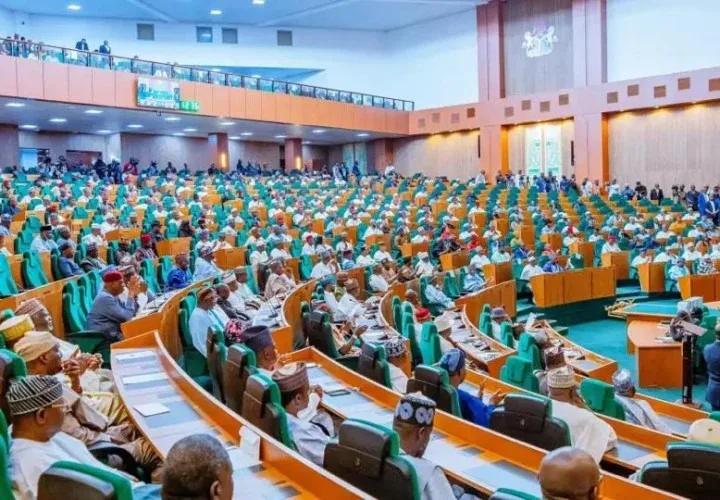
The House has reportedly passed the legislation through first reading, marking the beginning of its consideration at the lower chamber.
The proposed amendment seeks to strengthen the enforcement powers of the National Oil Spill Detection and Response Agency (NOSDRA) by introducing stricter sanctions against operators and other parties found responsible for environmental violations.
The Senate had approved the bill following the adoption of the report presented by its Committee on Environment, amid concerns that existing penalties were insufficient to discourage oil pollution and other environmental offences.
During consideration of the committee's report, Senate Chief Whip, Senator Tahir Monguno, who represents Borno North, highlighted the continued environmental damage caused by oil spills, particularly in the Niger Delta.
He explained that repeated pollution incidents had contaminated farmlands and waterways, affecting communities whose livelihoods depend largely on fishing and agriculture.
Monguno argued that the existing fines were not strong enough to discourage environmental offenders, stressing the need for tougher financial penalties and criminal liability for those responsible for serious pollution incidents.
According to him, the proposed legislation would provide stronger consequences for oil spills that damage the environment and deprive affected residents of their means of livelihood.
Following deliberations, the Senate dissolved into the Committee of the Whole to examine the bill clause by clause. Lawmakers approved all 12 clauses, alongside the short title, explanatory memorandum and long title.
The bill was subsequently returned to plenary, where it received third reading and was passed.
Senate President, Godswill Akpabio, commended the Senate Committee on Environment for its work and welcomed the proposed expansion of NOSDRA's enforcement responsibilities.
The legislative development is expected to strengthen environmental regulation in Nigeria's petroleum industry by providing a firmer legal basis for punishing violations and improving accountability.
Oil pollution remains a major challenge in the Niger Delta, where repeated spills have affected waterways, agricultural land and fishing activities, leaving many residents struggling with the economic consequences of environmental degradation.
For affected communities, the proposed amendment represents an opportunity for stronger protection of their environment and livelihoods.
However, the bill has not yet become law. It must secure approval from the House of Representatives and complete the remaining constitutional requirements, including presidential assent, before its provisions can take effect.
The proposed reforms will therefore depend on the successful completion of the legislative process and the eventual ability of NOSDRA to enforce the strengthened regulations.
Reporting by TalkNaijaMedia



Reader Comments (0)
No comments yet. Be the first to share your perspective on this report.