

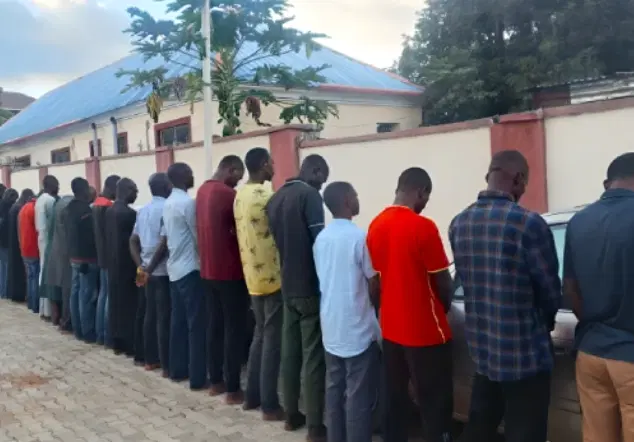
According to the findings, the deaths occurred between the night of September 16 and the morning of September 17, after people arrested during operations targeting suspected illegal mining were held in a poorly ventilated detention cell.
The committee said the operation was conducted without an approved operational order, adequate planning or proper consultation with relevant mining authorities. It also found that the NSCDC’s national headquarters had not been informed before the operation began.
The report stated that approximately 50 male detainees were confined in a cell measuring about 20 square metres. The facility reportedly lacked adequate airflow, running water and a functioning toilet, while food and drinking water were insufficient. Adults and minors were also detained together.
The panel concluded that the medical and forensic evidence pointed to environmental asphyxia and acute respiratory failure aggravated by heat stress and dehydration. It said the available evidence did not support claims that a disease outbreak caused the deaths.
The committee verified 33 fatalities, including 14 minors, and identified 41 survivors. It noted that some initial reports gave a higher death toll, but those figures could not be reconciled with the records and identified victims available to investigators.
The report further stated that detainees repeatedly called for help during the night, including pleading for water and banging on the cell doors and walls. According to the committee, officers failed to respond adequately, open the cell, reduce overcrowding or arrange emergency medical intervention despite signs of distress.
The panel identified failures at several levels of the Niger State command. It recommended dismissal for officers found primarily responsible and prosecution for offences such as criminal negligence, torture, murder or inhuman treatment where the evidence and applicable law support such charges. It also recommended administrative sanctions for personnel whose conduct contributed to the incident without amounting to primary responsibility.
The investigation raised concerns about the handling of evidence. The committee reported that the detention register for September 16 was unavailable and that 30 of the deceased had been buried before post-mortem examinations could be conducted. It also found that the detention area had been cleaned, disinfected and altered before independent forensic investigators arrived, limiting aspects of the examination.
Although some survivors alleged that an aerosol substance had been released into the cell, the committee said it found no evidence supporting the claim. The allegation therefore remained unproven on the available evidence.
Beyond individual responsibility, the panel identified wider institutional weaknesses within the NSCDC, including inadequate detention facilities, poor custodial supervision, insufficient emergency medical capacity, weak documentation and reporting systems, a lack of CCTV monitoring in custodial areas and chronic underfunding.
To address these problems, it recommended improved detention facilities, CCTV installation, independent custodial oversight, better emergency response arrangements and stronger training in human rights and detention management. It also called for broader reforms to the corps’ supervision, discipline and operational procedures.
On compensation, the committee proposed ₦30 million for each of the 33 bereaved families and ₦10 million for each of the 41 survivors, amounting to ₦1.4 billion. Additional recommendations included educational support for dependants of the deceased, medical rehabilitation for survivors, psychological assistance for affected families and a formal apology from the Federal Government.
Receiving the report, Tunji-Ojo said the government would not ignore the findings and promised that officers found culpable would face consequences. He also said the report would be forwarded to the Attorney-General of the Federation and Minister of Justice for further action where necessary.
The minister called for immediate action against officers suspected of concealing or altering evidence, pending investigation and appropriate disciplinary proceedings. He also signalled a wider review of the NSCDC’s operations and internal controls.
The committee’s recommendations are not, by themselves, proof that the proposed dismissals, prosecutions or compensation payments have been completed. Their implementation will depend on subsequent government decisions and any required disciplinary or legal processes.
The case has renewed scrutiny of detention conditions, the treatment of suspects and the responsibility of security agencies to protect people in their custody.
Reporting by TalkNaijaMedia



Reader Comments (0)
No comments yet. Be the first to share your perspective on this report.