

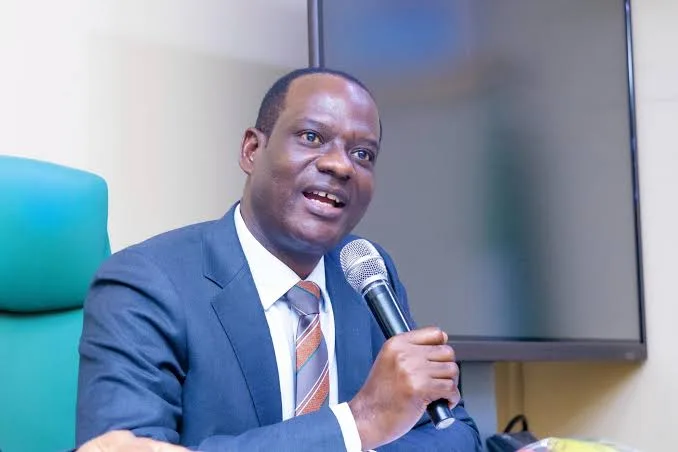
The meeting took place on Monday, October 12, on the sidelines of the 2026 International Monetary Fund (IMF) and World Bank Group Annual Meetings in Bangkok, Thailand, where Oyedele is leading Nigeria’s delegation.
Discussions centred on how the Federal Government could build on recent economic reforms to achieve faster economic growth, increase private-sector investment and strengthen domestic revenue generation.
Banga reportedly commended Nigeria’s reform efforts, highlighting figures presented by the Federal Ministry of Finance showing that private capital inflows had risen from approximately $300 million in 2023 to nearly $6 billion in 2026.
The figures represent a substantial increase in reported private financing activity, although the specific categories of capital included in the comparison were not fully detailed in the ministry’s public statement.
Oyedele also highlighted an increase in Nigeria’s tax-to-gross domestic product (GDP) ratio, which he said had risen from about seven per cent to 12.5 per cent over the period.
According to the minister, stronger domestic revenue collection could give the government greater capacity to finance public investment without relying excessively on deficit monetisation, a practice involving the use of central bank financing to cover government deficits.
The meeting also explored opportunities for Nigeria to make greater use of World Bank guarantee instruments to mobilise financing for infrastructure projects and encourage additional private investment in the domestic economy.
Such guarantees can help reduce investment risks and make eligible projects more attractive to commercial lenders and private investors, potentially easing financing constraints in critical sectors.
Power infrastructure and human capital development were identified as key areas requiring sustained public investment. Both are important to improving business competitiveness, raising productivity and creating employment opportunities.
The discussions also emphasised the need for better public spending outcomes, with government investments expected to deliver measurable economic and social benefits.
The engagement forms part of the Federal Government’s broader efforts to strengthen cooperation with international development partners and sustain the gains from its economic reform programme.
For Nigeria, the next challenge is to translate improved economic indicators and stronger investor interest into productive businesses, additional jobs and better living conditions for citizens.
Reporting by TalkNaijaMedia

Reader Comments (0)
No comments yet. Be the first to share your perspective on this report.