
The analysis of 32 companies showed that 31 firms with December financial year-ends had combined interest-bearing borrowings of ₦7.92 trillion as of September 30, 2026. This represents a 26.9 per cent decline from the ₦10.83 trillion recorded at the end of December 2025.
Although borrowing remains an important source of funding for businesses seeking to expand operations, acquire assets and finance working capital, the ability to repay those obligations is a major factor in determining whether a company's debt position is sustainable.
The review considered outstanding borrowings, shareholders' equity, finance costs, operating profits and cash flow to assess the financial pressure facing the companies.
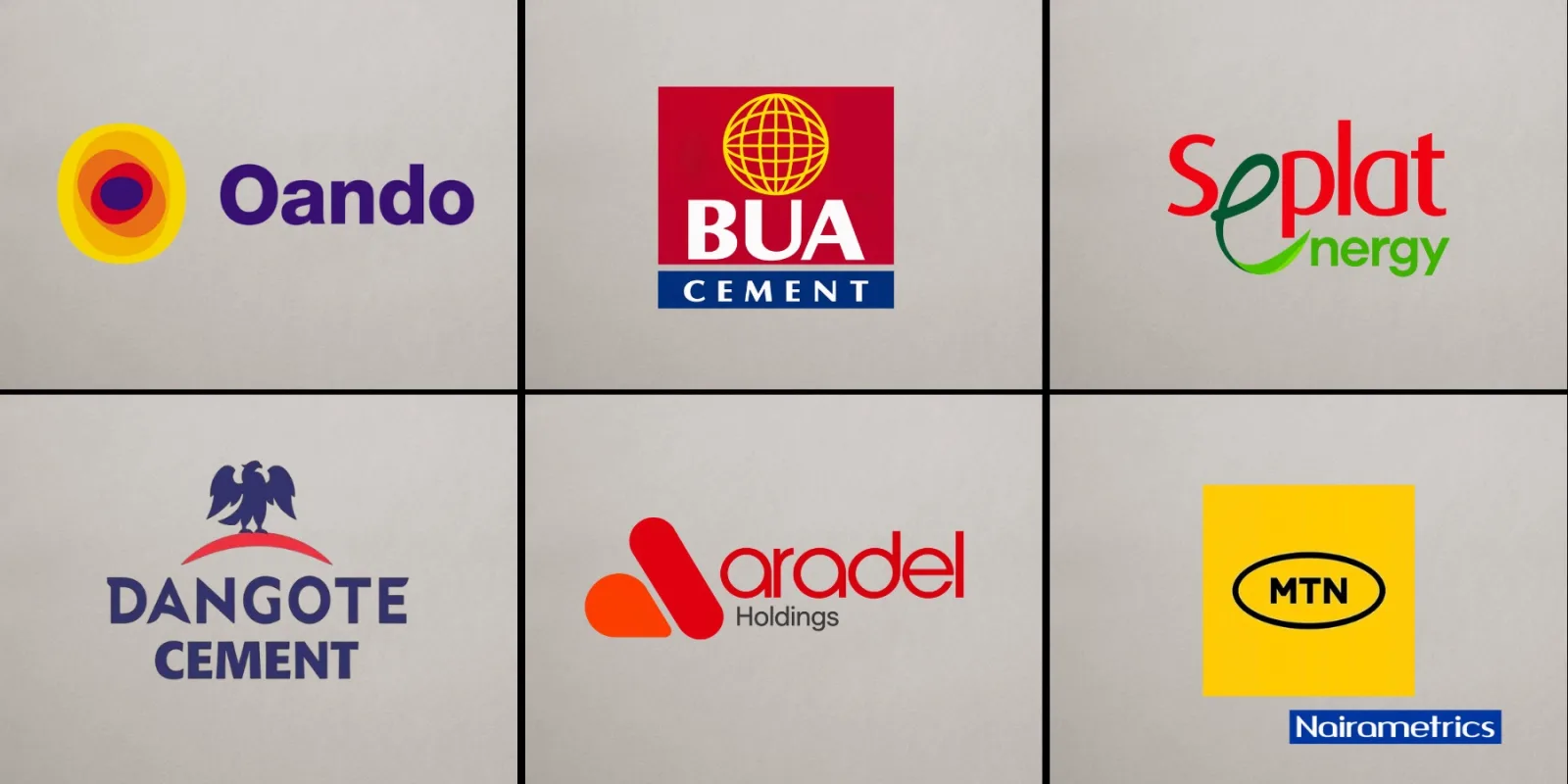
Oando recorded the highest outstanding borrowings among the companies examined, with ₦2.16 trillion as of September 2026. Aradel Holdings followed with ₦1.51 trillion, while Seplat Energy reported ₦1.05 trillion.
BUA Cement ranked fourth with ₦656.85 billion, followed by Dangote Cement with ₦541.53 billion and Nestlé Nigeria with ₦426.31 billion.
MTN Nigeria recorded ₦333.32 billion, while UAC of Nigeria had ₦262.63 billion. Presco and Transcorp completed the top 10 with ₦140.26 billion and ₦131.82 billion, respectively.
Together, the 10 companies accounted for approximately ₦7.21 trillion in outstanding borrowings at the end of September.
Airtel Africa was excluded from the ranking because its consolidated borrowings cover operations across 14 African countries rather than Nigeria alone. Its September financial statements showed borrowings of $2.18 billion, equivalent to approximately ₦2.90 trillion using the exchange rate stated in the report.
However, the companies with the largest borrowing balances are not necessarily those facing the greatest financial risks. A business may carry substantial debt but still have sufficient earnings and cash flow to meet its obligations.
The more important question is whether its operations generate enough money to cover financing costs and repay outstanding loans.
FTN Cocoa faces significant debt relative to shareholders' equity
FTN Cocoa Processors emerged as one of the companies requiring closer attention because of the size of its borrowings compared with its shareholders' equity.
The company reported outstanding borrowings of ₦21.95 billion as of September 30, 2026, representing a 5.4 per cent reduction from ₦23.21 billion recorded in December 2025.
Despite the reduction, shareholders' equity stood at approximately ₦1.23 billion. This means the company had about ₦17.89 in borrowings for every ₦1 of shareholders' equity.
Its cash balance was approximately ₦1.79 billion, leaving net debt at about ₦20.16 billion.
FTN Cocoa reported an operating profit of ₦2.08 billion during the nine-month period, compared with an operating loss of ₦328.18 million in the corresponding period of 2025.
However, the improvement was heavily influenced by foreign exchange gains of approximately ₦2.08 billion. Without those gains, the company would have recorded a marginal operating loss.
Finance costs also increased from ₦365.11 million to ₦617.71 million, while operating cash flow declined from ₦2.99 billion to ₦1.89 billion.
These figures raise questions about the company's ability to sustain its financial obligations through recurring income from its core operations.
UAC Nigeria's borrowing falls, but financing costs rise
UAC of Nigeria reduced its outstanding borrowings by 23.8 per cent, from ₦344.81 billion in December 2025 to ₦262.63 billion in September 2026.
Nevertheless, its debt remained considerably higher than its shareholders' equity of ₦70.85 billion, resulting in a debt-to-equity ratio of 3.71 times. Its net debt stood at approximately ₦231.09 billion.
The company's financing expenses increased sharply, rising from ₦8.68 billion in the first nine months of 2025 to ₦38.90 billion in the corresponding period of 2026.
Operating profit also improved significantly, increasing from ₦13.42 billion to ₦59.53 billion. However, this translated into interest coverage of approximately 1.53 times, meaning operating profit was only 1.53 times the reported finance costs.
One positive development was the improvement in operating cash flow, which rose from ₦21.56 billion to ₦103 billion.
The company's latest results also reflect the expanded contribution of its packaged food and beverages business following the acquisition of CHI Limited. This means changes in the group's business structure should be considered when comparing its performance with the previous year.
MeCure Industries spends a significant share of operating profit on financing
MeCure Industries also featured among the companies whose borrowing positions deserve attention.
Its interest-bearing debt increased by 7.5 per cent, from ₦55.33 billion in December 2025 to ₦59.51 billion in September 2026.
With shareholders' equity of ₦24.59 billion, the company had a debt-to-equity ratio of 2.42 times. Its cash holdings stood at only ₦4.32 billion, leaving net debt at approximately ₦55.18 billion.
During the nine months, MeCure generated operating profit of ₦17.49 billion but incurred finance costs of ₦8.84 billion.
Consequently, its operating profit covered financing costs approximately 1.98 times. In other words, financing expenses represented a substantial portion of the company's operating earnings.
Finance costs increased by 33 per cent, broadly matching the 34.3 per cent growth in operating profit.
However, its operating cash flow improved from a negative ₦5.40 billion in the first nine months of 2025 to a positive ₦10.36 billion in the corresponding period of 2026.
TotalEnergies Marketing records improvement but retains a narrow earnings cushion
TotalEnergies Marketing Nigeria provides another example of a company that reduced its borrowings but continued to face financing pressure.
Its outstanding debt declined from ₦84.67 billion in December 2025 to ₦81.76 billion in September 2026.
The company had shareholders' equity of ₦53.38 billion, giving it a debt-to-equity ratio of 1.53 times.
A significant portion of its borrowing exposure consisted of short-term facilities, including ₦59.26 billion in bank overdrafts and ₦22.50 billion in short-term intercompany borrowing.
The structure of these obligations makes liquidity and refinancing important considerations.
On a positive note, operating profit increased from ₦5.65 billion in the first nine months of 2025 to ₦19.16 billion in the same period of 2026.
Finance costs also declined from ₦20.55 billion to ₦12.30 billion.
Despite the improvement, interest coverage stood at 1.56 times. This was considerably better than the 0.28 times recorded in the corresponding period of 2025, when operating profit was insufficient to cover reported finance costs.
Conoil's rising debt raises cash flow concerns
Conoil also recorded an increase in its borrowing exposure during the period.
Its outstanding debt rose from ₦54.90 billion in December 2025 to ₦64.80 billion in September 2026, representing an increase of approximately 18 per cent. Compared with September 2025, borrowings were up by 63.3 per cent.
The company reported shareholders' equity of ₦44.55 billion, translating to a debt-to-equity ratio of 1.45 times.
More importantly, its operating cash flow was approximately ₦274.81 million during the nine months, while reported interest payments stood at about ₦12.99 billion.
This indicates that cash generated from ordinary operations during the period was insufficient on its own to cover the reported interest payments.
However, the figures must be considered alongside working capital movements, available cash reserves and other sources of financing before drawing conclusions about the company's overall ability to meet its obligations.
For investors, the key issue is whether the weakness in operating cash generation is temporary or reflects a longer-term challenge.
Transcorp Hotels' borrowings increase more than fivefold
Transcorp Hotels recorded one of the most significant increases in borrowing exposure among the companies examined.
Its borrowings rose from ₦10.52 billion in December 2025 to ₦54.96 billion in September 2026, representing a 422.5 per cent increase.
The change moved the company from a net cash position of ₦6.44 billion at the end of 2025 to net debt of approximately ₦34.62 billion by September 2026.
During the same period, operating profit declined slightly from ₦24.71 billion in the first nine months of 2025 to ₦24.36 billion in the corresponding period of 2026.
Finance costs more than doubled, rising from ₦2.80 billion to ₦5.91 billion, while interest coverage weakened from 8.82 times to 4.12 times.
Another concern was the deterioration in operating cash flow, which moved from a positive ₦18.82 billion to a negative ₦15.93 billion.
The increased borrowing may support business expansion or other investments, but its long-term value will depend partly on whether those investments generate sufficient cash returns.
Some major companies show improved debt positions
Despite the concerns surrounding some businesses, the analysis also identified companies that made progress in reducing their borrowing exposure.
Dangote Cement reduced its borrowings from approximately ₦1.08 trillion in December 2025 to ₦541.53 billion in September 2026.
MTN Nigeria also reduced conventional borrowings from ₦527.67 billion to ₦333.32 billion. However, its substantial lease liabilities should be considered separately when assessing its overall financial obligations.
Nigerian Breweries eliminated its outstanding conventional borrowings, compared with ₦59.71 billion recorded at the end of December 2025.
Nascon Allied Industries, Unilever Nigeria and Okomu Oil Palm also maintained relatively low conventional borrowing exposure alongside substantial cash coverage.
These examples show why borrowing levels must be assessed alongside a company's earnings, liquidity and ability to generate cash.
What investors should consider when assessing corporate debt
The findings highlight the importance of looking beyond the amount a company owes when evaluating its financial position.
Investors should consider how much debt a business carries relative to its shareholders' equity, whether operating earnings can comfortably cover finance costs and whether cash generated from normal business activities is sufficient to support repayments.
The nine-month financial statements identified FTN Cocoa Processors, UAC of Nigeria, MeCure Industries, TotalEnergies Marketing Nigeria and Conoil as companies requiring particularly close scrutiny.
However, the findings do not establish that any of these businesses is unable to meet its financial obligations.
Ultimately, borrowing is not automatically a sign of poor financial health. The greater concern arises when debt becomes difficult to sustain because earnings, cash flow and available financial resources are insufficient to support it.
Reporting by TalkNaijaMedia


Reader Comments (0)
No comments yet. Be the first to share your perspective on this report.