

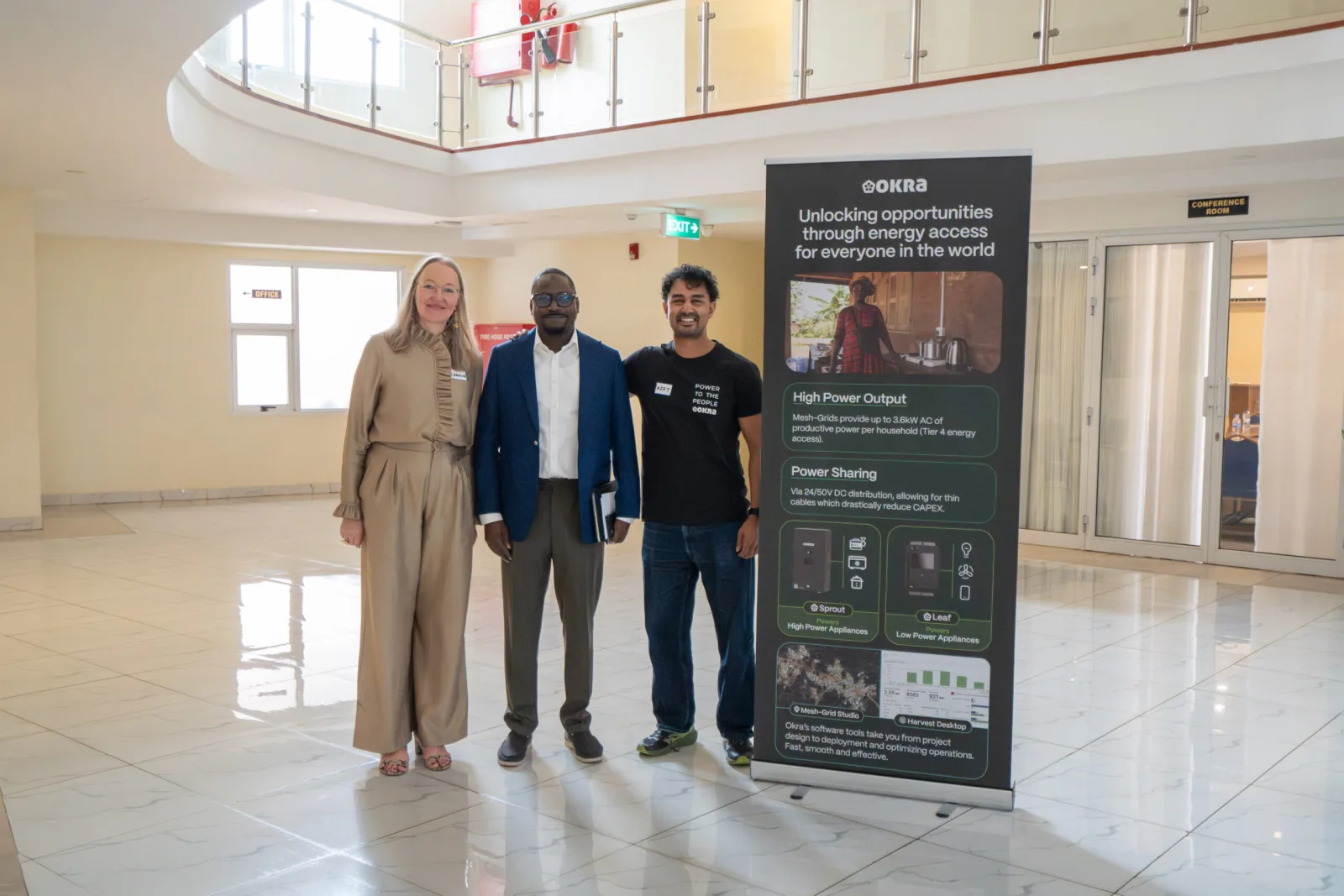
The event brought together energy sector leaders, policymakers, development partners and project developers to examine how mesh-grid technology could improve electricity access in underserved communities across Africa.
Aliyu explained that mesh-grids provide another option for communities where conventional electricity infrastructure or other off-grid solutions may be difficult and expensive to deploy.
The technology combines solar panels, battery storage and smart control systems to distribute electricity through a shared network connecting homes and businesses.
Unlike conventional mini-grids, mesh-grid systems can be deployed across smaller and dispersed communities without requiring extensive distribution infrastructure. They can also provide more electricity for household and commercial activities than basic standalone solar systems.
Aliyu encouraged other African countries to study Nigeria’s experience by visiting communities already benefiting from the technology and engaging with REA’s technical teams.
Chief Executive Officer of Okra Solar, Afnan Hannan, also highlighted the importance of mesh-grids to Africa’s electricity expansion efforts, particularly under Mission 300, which seeks to connect 300 million people across the continent to electricity by 2030.
Hannan noted that reaching remote communities quickly would be critical to achieving the initiative’s target, adding that mesh-grids could provide a cost-effective way to supply electricity for both households and businesses.
According to REA, Nigeria has become the first country to establish a national funding programme that recognises mesh-grids as a distinct electricity access technology. Under the arrangement, developers can receive a $300 results-based grant for each qualifying connection.
The funding model is intended to encourage private investment and reduce the financial challenges associated with extending electricity to remote communities.
Mesh-grids are also expected to contribute to the Federal Government’s $750 million Distributed Access through Renewable Energy Scale-up (DARES) programme, which aims to provide new or improved electricity access to more than 17.5 million Nigerians.
During his presentation, Aliyu said the programme had reached 7.6 million people, with more than $582 million committed.
He also disclosed that REA had approved 13,438 mesh-grid connections for grants in 2026, while approximately 98,000 additional connections were in the pipeline.
The agency reported power availability of 97.7 per cent in communities already connected through the technology. It also said the highest-consuming 10 per cent of households use more than 1,400 watt-hours of electricity daily.
Such consumption levels can support household appliances, including televisions, fans and chest freezers, as well as small businesses operating equipment such as sewing machines.
More than 20 representatives from African governments, the World Bank, funding institutions and renewable energy companies attended the Kigali roundtable.
The meeting also featured the launch of a GET.invest policy brief titled Scaling the Adoption of Mesh-Grids in Sub-Saharan Africa, which examines the role of the technology in expanding electricity access across the region.
Participants called for greater flexibility in allowing developers to adopt the most affordable technologies for different communities. They also stressed the importance of combining results-based grants with debt financing to help local energy companies raise the funds required to build projects.
The discussions further highlighted the need for African countries to develop clear regulatory frameworks that would support the wider adoption of mesh-grid systems.
Nigeria’s experience is expected to provide useful lessons for other countries seeking affordable and reliable electricity solutions for rural and underserved communities.
Reporting by TalkNaijaMedia


Reader Comments (0)
No comments yet. Be the first to share your perspective on this report.