

The country, however, has substantial resources that could support a stronger energy economy if investment in production, processing, transportation and electricity infrastructure is properly coordinated.
The Nigerian Upstream Petroleum Regulatory Commission (NUPRC) reported that, as of January 1, 2026, the country had total oil and condensate reserves of 37.01 billion barrels and natural gas reserves of 215.19 trillion cubic feet.
These figures underline the scale of Nigeria’s resource base, but the availability of reserves alone does not guarantee economic growth. Turning them into usable energy requires investment, efficient infrastructure, effective regulation and stronger connections between producers and domestic consumers.
The challenge is particularly important given Africa’s electricity access deficit. The International Energy Agency estimated in 2025 that approximately 600 million people in sub-Saharan Africa lacked access to electricity as of 2024. Reliable power remains essential for manufacturing, healthcare, education, agriculture, digital services and other economic activities.
For Nigeria, the opportunity is therefore not simply to produce more hydrocarbons but to build an integrated energy system that connects oil and gas development with electricity generation, industrial expansion and improved living standards.
The Federal Government and NNPC Limited have set ambitious production targets for the end of the decade. These include increasing crude oil production to three million barrels per day and raising natural gas output to 12 billion cubic feet daily by 2030.
Achieving these goals will require sustained investment in exploration, processing facilities, pipelines, power generation, transmission infrastructure and industrial demand centres.
Natural gas and the opportunity for industrial growth
Natural gas is expected to play an increasingly important role in Nigeria’s energy development, particularly because of its potential to support electricity generation and industrial production.
The country already has a substantial gas resource base and opportunities to expand its use across power generation, fertiliser production, petrochemicals, manufacturing, transportation and other industries.
Gas can also provide a dependable fuel source for electricity generation when supported by reliable supply infrastructure and properly maintained power plants. However, increasing production alone will not resolve Nigeria’s electricity challenges. Processing capacity, pipeline networks, gas pricing, power-sector finances and transmission infrastructure must also improve.
The ANOH Gas Processing Plant provides an example of the technology and infrastructure partnerships required to develop the domestic gas market.
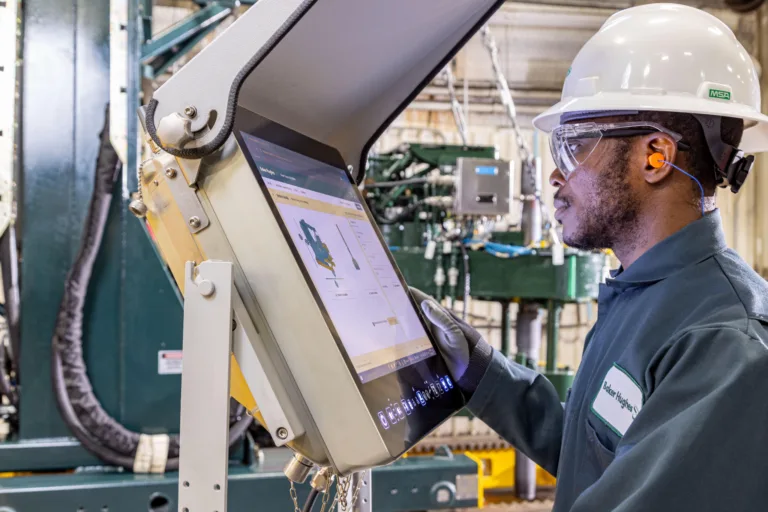
In June 2026, energy technology company Baker Hughes announced a long-term service agreement with ANOH Gas Processing Company covering maintenance, technical support and digital monitoring for critical equipment at the facility.
The agreement includes support for two gas turbines, engineering advisory services and digital solutions designed to improve equipment reliability and operational performance. Baker Hughes also confirmed that the work would be supported through its service centre in Port Harcourt, Nigeria.
The development illustrates how technology providers can contribute to the performance of major energy infrastructure projects.
However, the broader challenge remains connecting available gas resources to power plants, manufacturers and other consumers. Without sufficient pipelines, processing facilities and dependable demand, the economic value of Nigeria’s gas reserves will remain below its potential.
Reducing routine gas flaring and improving gas recovery could also create additional opportunities for domestic utilisation, provided the necessary commercial arrangements and infrastructure are in place.
Deepwater projects and their wider economic contribution
Nigeria’s offshore oil and gas sector represents another important opportunity for increasing production and attracting investment.
Several deepwater developments are being considered or advanced as part of efforts to strengthen the country's production capacity. These include Bonga Southwest-Aparo, Owowo, Zabazaba-Etan and Bosi.
The projects are at different stages of development, and their contribution will depend on investment decisions, regulatory approvals, financing and successful execution.
The Zabazaba-Etan development has received renewed attention following the resolution of the long-running dispute surrounding the former Oil Prospecting Licence 245.
In March 2026, the Federal Government and Eni reached an agreement that cleared the way for development of the offshore fields. Eni's proposed development plan includes a floating production, storage and offloading facility with a processing capacity of approximately 150,000 barrels of oil per day.
The project is expected to support additional oil and gas production, although its projected capacity should not be confused with actual current output.
Other deepwater opportunities, including Bonga Southwest-Aparo and Owowo, could also contribute to future production if they progress to full development.
Beyond the volumes of oil and gas they may produce, large offshore projects can create demand for engineering services, subsea equipment, fabrication, logistics, drilling support, digital technology and long-term maintenance.
They also offer opportunities for Nigerian businesses to participate in the supply chain, while supporting technical training and the development of specialised skills.
For these benefits to reach the wider economy, local content policies and industry partnerships must translate into meaningful opportunities for domestic companies and workers.
Connecting energy production to domestic economic value
Nigeria’s energy resources can support more than exports and government revenue. They can also provide the foundation for domestic industries capable of creating jobs, supplying essential products and strengthening the country's economy.
Investments in refining, fertiliser production, gas processing and petrochemicals demonstrate how locally available resources can support domestic manufacturing and reduce dependence on imported products.
The growth of these industries, however, depends on reliable energy supply, competitive operating costs, access to finance and infrastructure that allows businesses to move products efficiently.
Electricity access must therefore remain central to the country's energy development strategy. Expanding generation without improving transmission and distribution will not deliver the full benefits of additional capacity.
The same applies to gas development. More production must be matched by infrastructure that transports the resource to power plants, factories and other users.
Nigeria also needs investment models that encourage collaboration between government, local businesses, international energy companies and technology providers. Such partnerships can help mobilise the capital and expertise required to develop major projects while strengthening domestic capabilities.
Building an integrated energy future
Nigeria has the natural resources, technical experience and entrepreneurial capacity to become a stronger player in Africa’s energy market. However, achieving that ambition will require consistent implementation of policies, investment in infrastructure and better coordination across the energy value chain.
The country's production targets provide an important direction, but their success should be measured alongside improvements in electricity access, industrial productivity, local participation and the reliability of domestic energy supply.
Natural gas development, deepwater investments, modern technology and improved infrastructure all have important roles to play. None can deliver lasting results in isolation.
Ultimately, Nigeria's energy future should not be judged only by the number of barrels of oil produced or the volume of gas exported. It should also be measured by how effectively the country's resources provide dependable power, support businesses, create employment and improve the quality of life of its people.
Building that future will require an integrated approach that turns resource abundance into tangible economic value for Nigerians.
Reporting by TalkNaijaMedia


Reader Comments (0)
No comments yet. Be the first to share your perspective on this report.