

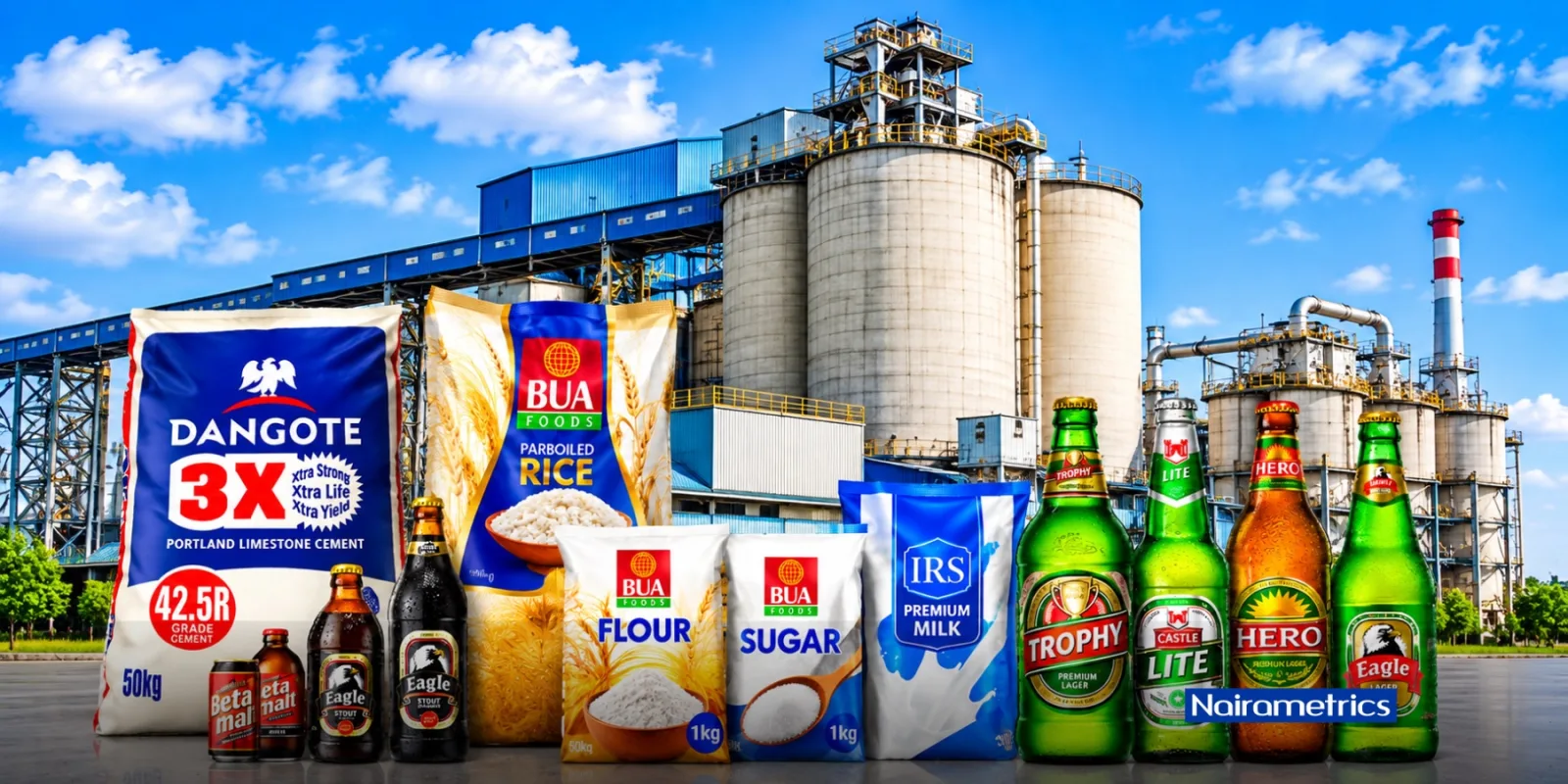
Data covering Dangote Cement, BUA Foods, HBM Nigeria and International Breweries showed that their combined sales increased by approximately 31 per cent in the first nine months of 2025, while their cost of sales rose by 15 per cent.
However, in the corresponding period of 2026, the four companies recorded sales growth of about nine per cent, even as their combined cost of sales declined by approximately six per cent.
The wider review of 10 listed manufacturing companies also revealed an improvement in profitability. Their combined sales increased by 10.7 per cent in the first nine months of 2026, while the cost of goods sold dropped by 1.6 per cent.
Consequently, the companies retained about ₦53 from every ₦100 in revenue after accounting for direct production costs, compared with approximately ₦48 in the corresponding period of 2025.
The figures suggest that manufacturers are benefiting increasingly from lower costs rather than depending entirely on higher prices charged to consumers.
The cement industry, however, remains one of the clearest examples of manufacturers maintaining pricing power despite rising retail costs.
A 50kg bag of cement that sold for approximately ₦10,000 in Lagos and Ogun states in September 2025 was selling for between ₦12,000 and ₦15,000 between July and September 2026.
Financial results from Dangote Cement showed that its Nigerian operations generated 22.5 per cent more revenue in the first nine months of 2026 than in the same period of 2025. Its domestic sales volume also increased by 6.4 per cent, while revenue per tonne rose by approximately 15 per cent.
This indicates that both higher selling prices and increased sales volumes contributed to the company's performance in 2026, although retail prices paid by customers do not necessarily represent the amount received by manufacturers after distribution and other costs.
BUA Cement and HBM Nigeria also recorded higher sales volumes, suggesting that demand for cement remained relatively strong despite the increase in prices.
The palm oil market presents a different situation. Presco and Okomu benefited from higher palm oil prices in 2025, increasing their sales revenue without reducing the quantities sold.
However, cheaper imported edible oil in 2026 provided buyers with alternatives and made it more difficult for local producers to increase prices.
Okomu's financial performance illustrates the pressure, as its direct production costs consumed a larger share of revenue in 2026. Presco, meanwhile, maintained a stronger position by reducing its cost of sales despite declining edible oil prices.
The brewing industry has also experienced changes in consumer demand and production costs.
Nigerian Breweries increased prices in 2025 to respond to inflationary pressures, while its parent company, Heineken, reported higher revenue from Nigeria despite selling lower volumes of beer.
International Breweries benefited from a combination of improved pricing and increased sales volumes during the same period.
In 2026, brewers introduced further price adjustments on selected products. However, weaker demand remains a concern, with Heineken reporting lower beer volumes in Nigeria during the third quarter.
While increased prices helped some companies maintain revenue, the experience of Nigerian Breweries highlights the risk that repeated price increases could discourage consumers from buying the same quantities.
Food and household goods manufacturers have also benefited from improved cost conditions.
BUA Foods, Nestlé Nigeria and Unilever Nigeria recorded stronger sales growth in 2025, partly supported by higher prices. But BUA Foods' 2026 results demonstrate how reducing production costs can improve margins even when revenue declines.
The company lowered prices on some products and recorded lower sales revenue, yet retained a greater share of each naira earned because its cost of sales fell more significantly.
Dangote Sugar recorded a similar improvement, generating stronger returns after production costs as its cost of sales declined faster than revenue. NASCON also improved its earnings after direct production costs despite relatively flat sales.
Nestlé Nigeria and Unilever Nigeria recorded higher revenue and retained a larger proportion after production costs, although their financial results do not clearly separate the contribution of higher prices from increased sales volumes.
The changing performance of these manufacturers has important implications for consumers and investors as businesses prepare for 2027.
Although some companies may still have room to increase prices, the ability to pass every additional production cost to customers is becoming less certain. Consumer purchasing power, competition from imported products and the possibility of declining sales volumes could limit further price adjustments.
For investors, the figures suggest that manufacturers capable of expanding sales while controlling production costs may be better positioned to sustain earnings growth than those relying mainly on repeated price increases.
Ultimately, stronger profit margins will depend not only on how much companies charge customers but also on their ability to manage expenses, maintain demand and convert revenue into sustainable profits.
Reporting by TalkNaijaMedia





Reader Comments (0)
No comments yet. Be the first to share your perspective on this report.