

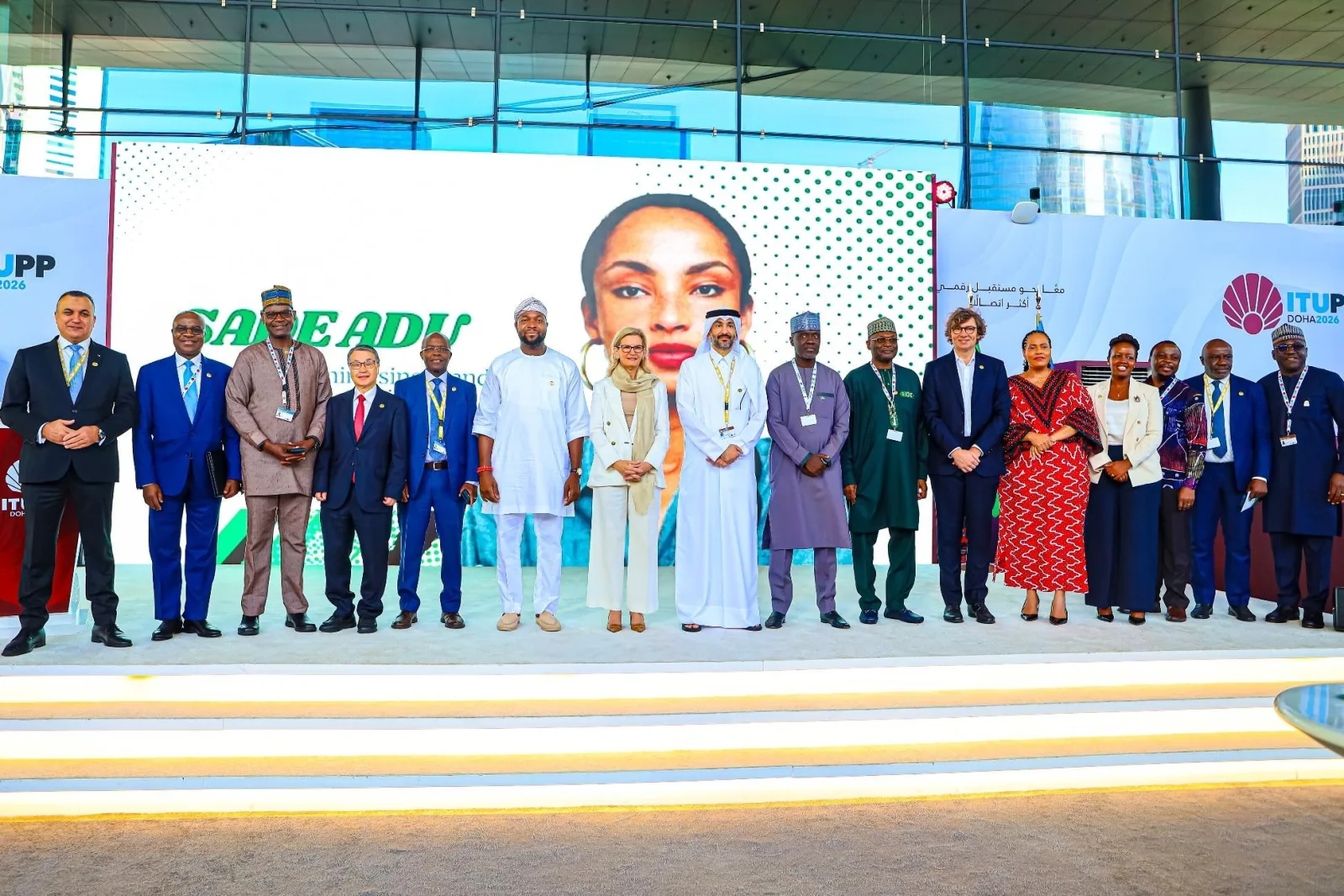
The Federal Ministry of Communications, Innovation and Digital Economy announced the development, describing it as an important achievement for Nigeria's international telecommunications engagement and digital development ambitions.
Minister of Communications, Innovation and Digital Economy, Dr Bosun Tijani, led Nigeria's delegation to the conference. The country's diplomatic engagement was coordinated by the Minister of Foreign Affairs, Ambassador Bianca Odumegwu-Ojukwu, while Nigeria's Ambassador to Qatar, Professor Mahmood Yakubu, served as deputy head of delegation.
Other members of the delegation included the Executive Vice Chairman of the Nigerian Communications Commission (NCC), Dr Aminu Maida, and officials from relevant government institutions and Nigeria's diplomatic missions.
The ITU Council serves as the organisation's governing body between Plenipotentiary Conferences. It supervises the implementation of the Union's policies and strategies, oversees its activities and prepares draft strategic and financial plans for consideration at subsequent conferences.
Nigeria's renewed membership provides an opportunity to participate in international discussions on telecommunications standards, radio-frequency spectrum management, satellite communications, digital infrastructure and efforts to expand affordable connectivity.
Reacting to the outcome, Tijani said the renewed mandate reflected international confidence in Nigeria's contributions to the global digital agenda. He indicated that the country would use its position to promote meaningful connectivity, strengthen Africa's participation in international technology discussions and support opportunities arising from emerging technologies.
The 2026 conference also produced decisions on the ITU's senior leadership. Member states re-elected Doreen Bogdan-Martin of the United States as Secretary-General, while Adel Darwish of Bahrain was elected Deputy Secretary-General.
Other leadership appointments included Eric Fournier of France as Director of the Radiocommunication Bureau, Seizo Onoe of Japan as Director of the Telecommunication Standardization Bureau, and Nele Leosk of Estonia as Director of the Telecommunication Development Bureau.
The elections will shape the organisation's leadership and governance priorities over the next four years, at a time when countries are addressing rapid changes in artificial intelligence, telecommunications infrastructure, digital security and global connectivity.
For Nigeria, retaining its place on the Council offers a platform to contribute to international policy discussions and advance its interests in the evolving global digital economy.
Reporting by TalkNaijaMedia


Reader Comments (0)
No comments yet. Be the first to share your perspective on this report.