

Nigeria’s 1,506 participants reportedly comprise 573 people registered under the Party badge category and another 933 with Party Overflow badges.
Party badges are generally issued to official government delegates, including negotiators, diplomats and other representatives authorised to participate in climate discussions on behalf of their countries.
Party Overflow badges, on the other hand, accommodate additional participants registered through national governments. They may include advisers, experts and other stakeholders who are not necessarily part of the core negotiating delegation. Their access to negotiation sessions and activities is subject to conference accreditation rules and available space.
China ranks fourth with 1,021 participants, while Indonesia occupies fifth position with 978. Other countries in the top 10 include Australia with 835, Uganda with 627, Italy with 607, Japan with 588 and Kazakhstan with 557.
The United Kingdom has 255 registered participants, while North Korea has the smallest delegation, with just two people.
Nigeria’s latest ranking has renewed public interest in the size and cost of the country’s participation in international climate conferences, particularly against the background of economic difficulties affecting many citizens.
The issue is not entirely new. At COP28 in Dubai in 2023, Nigeria registered 1,411 participants, placing it among the countries with the largest delegations at the summit.
Following public criticism over the size of the contingent, the Federal Government clarified that 422 participants were funded by the Federal Government. It explained that the wider Nigerian delegation also included representatives of state governments, private companies, civil society organisations, the media, academia and other groups.
However, the latest registration figures do not establish how many of Nigeria’s COP31 participants are being sponsored with public funds. Without a detailed breakdown from the relevant government authorities, the extent of taxpayers’ financial involvement in the current delegation remains unclear.
The absence of publicly available funding details also raises questions about transparency, accountability and the criteria used to select participants for international climate negotiations.
Beyond the cost of participation, the size of a delegation does not necessarily determine how effectively a country advances its interests. The technical expertise, preparation and negotiating capacity of its representatives are important in securing meaningful outcomes from climate discussions.
COP31 is provisionally on course to become the largest United Nations climate conference recorded so far, with 92,934 people registered for in-person participation.
The figure is higher than the attendance recorded at COP28 in Dubai, which attracted more than 80,000 participants. However, the COP31 total remains provisional because the UNFCCC will determine final attendance using the number of participants who collect their physical accreditation badges at the venue.
Carbon Brief’s analysis shows that 18,812 participants are registered as party delegates, making this the second-largest party delegation total recorded at a climate conference, behind COP28.
The provisional figures also list 3,645 media representatives, 13,388 observers, 16,726 overflow participants and 39,400 people in other categories, including conference staff.
More than 3,000 additional participants have registered to join virtually, taking total registrations beyond 95,000.
The analysis further indicates that men account for 59 per cent of participants in party delegations, while women represent 41 per cent, suggesting that gender representation remains an area for improvement.
Although the figures provide an indication of the scale of international participation, they do not independently establish the level of government expenditure or the influence individual delegates will have on the negotiations.
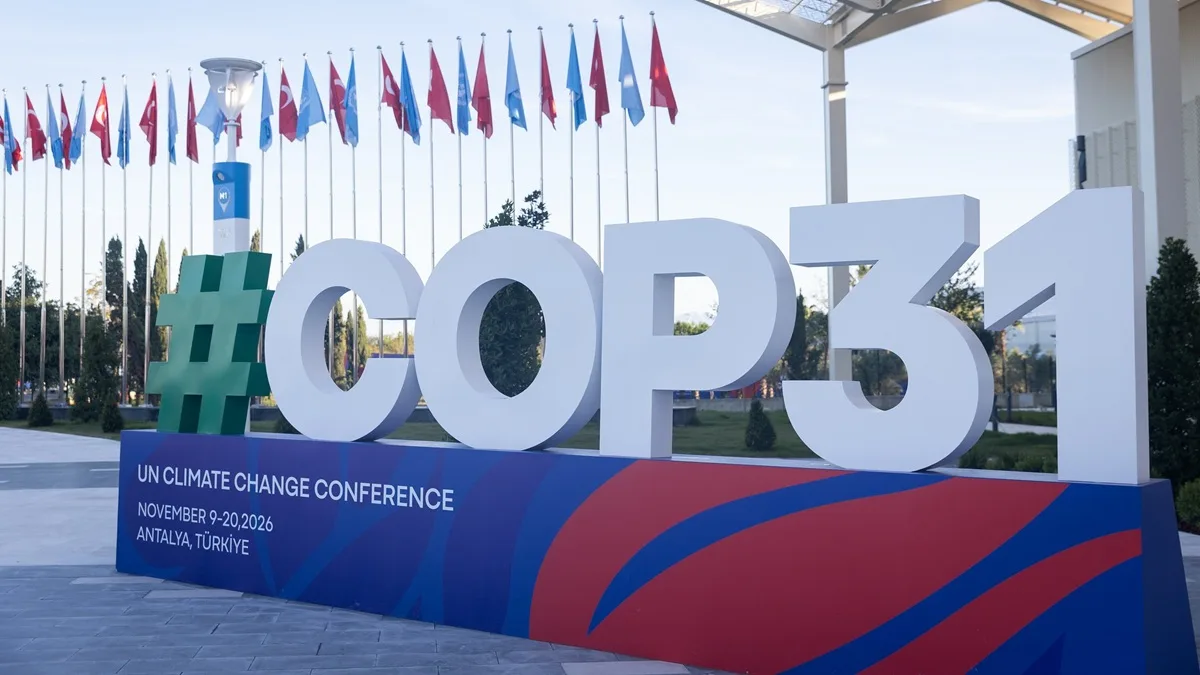
COP31 is taking place in Antalya, Turkey, from November 9 to 20, 2026, bringing together governments, climate experts, civil society groups, businesses and other stakeholders to discuss international responses to climate change.
Reporting by TalkNaijaMedia


Reader Comments (0)
No comments yet. Be the first to share your perspective on this report.