

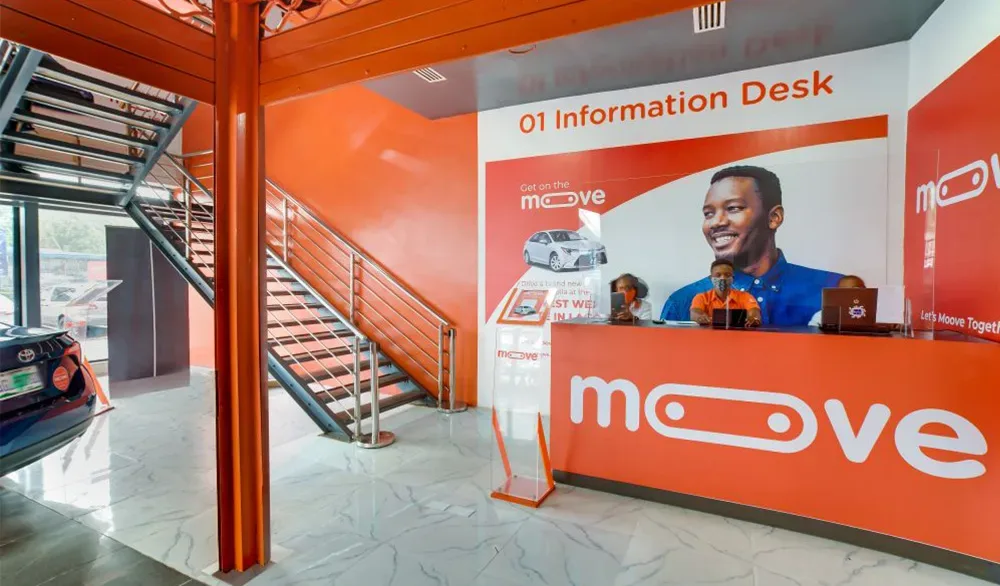
Moove, the Nigerian-founded global mobility and vehicle-financing company, is set to end its operations in Nigeria, bringing its six-year journey in the country where the business was founded to a close.
The company announced the decision on Thursday as part of what it described as a “Thank You Nigeria” initiative aimed at recognising the customers, employees, partners and communities that supported its growth from a Lagos-based startup into an international mobility business.
Moove was founded in 2020 by Ladi Delano and Jide Odunsi after the co-founders identified a major challenge facing mobility entrepreneurs in Nigeria: many drivers wanted to earn a living through ride-hailing but struggled to secure financing for vehicles.
The company initially launched in Lagos with 76 vehicles and developed a Drive-to-Own model that allowed mobility workers to access vehicles through financing tied to their earnings.
Moove's own account of its history describes the company as a Nigerian-born startup created to address limited access to vehicle financing for mobility entrepreneurs. It has since expanded internationally, with its business now extending beyond its original vehicle-financing model.
According to figures released by the company, more than 9,000 customers have used its Drive-to-Own and rental products in Nigeria since its launch.
Moove said vehicles financed through its platform helped customers generate approximately ₦57 billion in revenue, supporting livelihoods and businesses across the country.
As it winds down its Nigerian operations, the company said eligible vehicles currently operated by customers, with an estimated combined value of about ₦35 billion, will be transferred into the full ownership of those customers.
The transfer is expected to take effect from October 1, 2026, with Moove stating that customers will not be required to make any further payment to the company for the vehicles themselves, subject to eligibility and the terms of the transfer programme.
Moove also announced that its Nigerian employees will receive a free car as part of the company's appreciation package.
The initiative represents a significant change for customers who originally accessed vehicles through Moove's financing arrangements and comes shortly after Uber ended its Nigerian operations on September 2, 2026, following 12 years in the market.
Moove had maintained a major relationship with Uber, with Moove-financed vehicles deployed by drivers using the ride-hailing platform. Uber's departure subsequently created uncertainty for some drivers who still had financing obligations on their vehicles.
Moove's decision to leave Nigeria follows the company's broader international expansion. In August 2026, the company announced a $250 million Series C funding round at a $2.1 billion valuation, strengthening its position as a global mobility and autonomous-vehicle infrastructure company.
For Moove co-founder and co-CEO Ladi Delano, however, the Nigerian chapter remains central to the company's identity.
Delano said Nigeria provided Moove with its first customers, employees and the foundation on which the company built its international business.
He expressed appreciation to customers who trusted the company when it was still a new idea and acknowledged the Nigerian team whose work helped transform the Lagos startup into a global company.
Moove also thanked its partners, regulators and the wider Nigerian community for supporting the company during its early years.
The company said it will work directly with affected customers and employees as it completes the process of transferring eligible vehicles and concludes its Nigerian operations.
Although Moove is leaving the market where it began, the company continues to describe itself as a Nigerian-born global business focused on vehicle financing, mobility and emerging transportation technologies.
Its departure marks the end of a notable chapter for one of Nigeria's better-known technology startups, while the transfer of qualifying vehicles could give thousands of mobility entrepreneurs a chance to retain assets they had previously operated under financing arrangements.
Reporting by TalkNaijaMedia



Reader Comments (0)
No comments yet. Be the first to share your perspective on this report.