

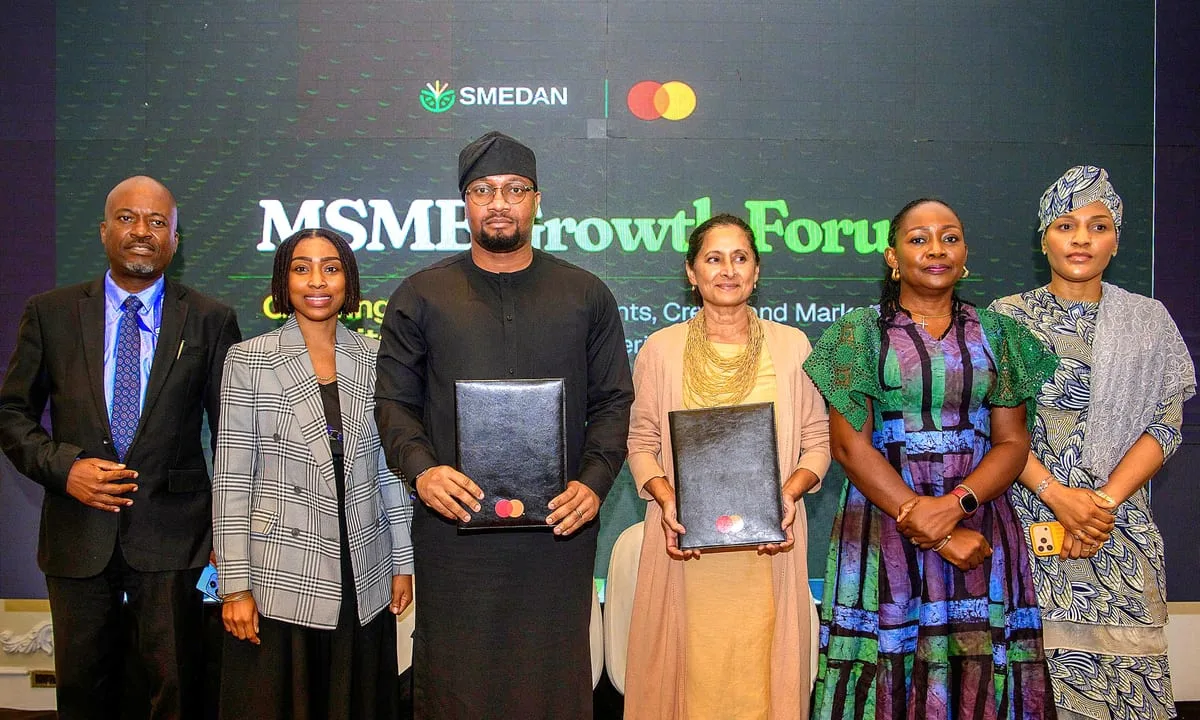
The partnership is expected to provide a framework for both organisations to explore opportunities that will help Nigerian businesses adopt digital tools, strengthen their operations, improve efficiency and participate more actively in the formal economy.
The initiative also aligns with the Federal Government’s broader efforts to promote digital transformation and strengthen the contribution of small businesses to economic development.
Speaking at the event, Mastercard’s Executive Vice President for Growth Segments, Tara Nathan, said small businesses remain important drivers of economic growth, job creation and innovation but continue to face challenges involving digital adoption, skills development and access to finance.
Nathan said the partnership would explore ways to provide entrepreneurs with relevant tools, knowledge and business connections to improve their competitiveness and build more resilient enterprises.
SMEDAN Director-General, Charles Odii, said Nigerian entrepreneurs required practical support that addressed the realities of operating small businesses, rather than general encouragement to embrace digital technology.
He explained that the collaboration would create opportunities to bring digital capabilities and business support closer to entrepreneurs while strengthening coordination with government institutions and other partners.
Mastercard’s Vice President for Core Payments in West Africa, Kari Tukur, also stressed that supporting small businesses required more than access to loans.
She identified digital payment solutions, practical business skills, market access and reliable partnerships as important elements needed to help entrepreneurs expand their operations sustainably.
The forum featured a keynote address by Nathan and a fireside discussion examining how digital payments, supportive government policies and stronger financial inclusion could help businesses in the informal sector become more integrated into the formal economy.
The session, titled “Informal to Inclusive: Payments, Policy and the Path for Nigeria’s Small Businesses,” also featured Aisha Rimi, Executive Secretary and Chief Executive Officer of the Nigerian Investment Promotion Commission (NIPC).
Discussions focused on investment readiness, business expansion and opportunities for smaller enterprises to reach wider markets.
Another session, titled “Beyond Credit: The Solutions Nigerian SMEs Need to Grow and Scale,” examined the support businesses require beyond conventional lending.
Participants considered how access to digital financial services, business development assistance, improved market connections and supportive policies could help entrepreneurs overcome obstacles to expansion.
Small business owners also participated in practical masterclasses covering digital marketing and other business capabilities. The sessions were designed to help entrepreneurs attract and retain customers online, improve productivity and explore opportunities in important sectors, including agriculture.
The partnership comes as digital adoption increasingly features in the growth plans of Nigerian businesses.
According to Mastercard’s 2026 SME Confidence Index, all Nigerian SMEs surveyed considered digital and online payments important to business growth. The study also found that 78 per cent identified digitising their operations as a major priority, while 79 per cent prioritised staff training and skills development.
Furthermore, 69 per cent of the surveyed businesses said they were seeking credit to support expansion.
The findings highlight the need for a broader support system that combines financial services with technology, business education and improved access to markets.
Through the MoU, Mastercard and SMEDAN aim to explore practical ways of strengthening the competitiveness of Nigerian MSMEs and helping more entrepreneurs benefit from the opportunities offered by the digital economy.
Reporting by TalkNaijaMedia





Reader Comments (0)
No comments yet. Be the first to share your perspective on this report.