

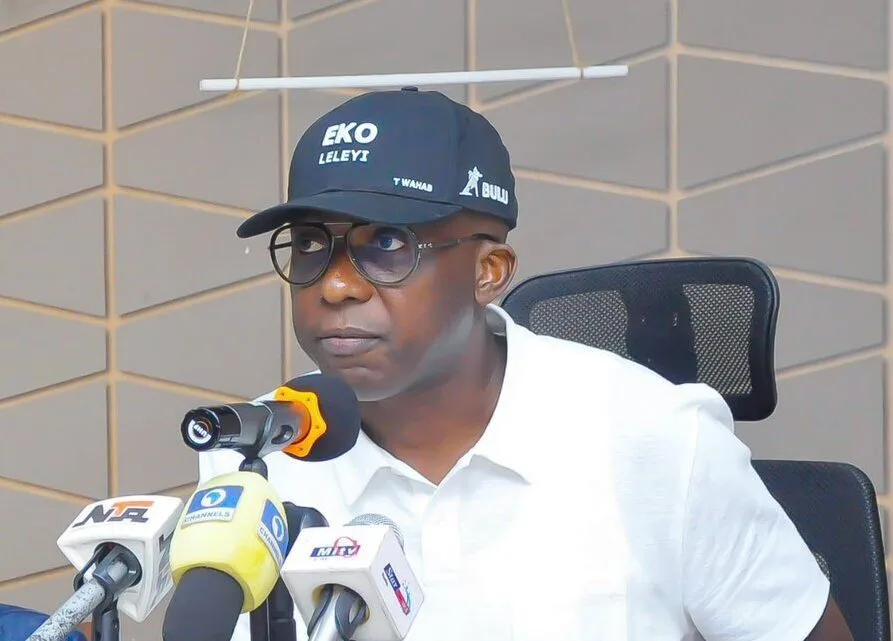
Wahab explained that the exercise was not the introduction of a new policy but an effort to ensure compliance with existing environmental and water management requirements.
He said regulating groundwater resources was necessary to protect underground water supplies, prevent contamination, reduce the risk of land subsidence and safeguard the state's long-term water security.
The commissioner added that LASWARCO had intensified its monitoring and enforcement activities to ensure that operators comply with applicable permit requirements.
However, the distinction between household and commercial boreholes is important. Under Sections 253 and 259 of the 2017 law, a household may construct or extend a borehole in residential premises without obtaining a licence from the Lagos State Water Corporation, provided it is strictly for the domestic water needs of the household. The provision also requires compliance with applicable construction regulations.
The law separately requires appropriate authorisation for boreholes intended for non-domestic purposes. This distinction means that the permit requirements should not automatically be interpreted as applying equally to every household borehole.
The government's clarification follows a warning by LASWARCO Executive Secretary, Barrister Oluwabukola Khadijah Adeyemo, that the commission could seal facilities operating in violation of applicable regulations and prosecute offenders.
Adeyemo had urged prospective borehole drillers and groundwater abstractors to obtain the necessary approvals before commencing activities where such permits are required.
She expressed concern about uncontrolled drilling and groundwater extraction, warning that poorly managed activities could expose underground water sources to contamination and create environmental challenges.
LASWARCO maintains that its regulatory responsibilities are provided for under the 2017 law, which gives the commission powers to regulate groundwater abstraction, consumption, supply and distribution, as well as the sinking and management of boreholes and water wells.
The law also provides for the regulation of relevant water-sector activities, including applicable rates and charges. Consequently, although the government denies introducing a new borehole tax, the existence of regulatory permit requirements and prescribed fees remains relevant for activities that fall within the applicable approval process.
Lagos began strengthening its regulation of groundwater resources in August 2022 as part of efforts to improve oversight of borehole drilling, water extraction and distribution.
The issue has also raised concerns about water quality in some parts of the state. In August 2025, the government warned about possible contamination risks associated with boreholes in the Lekki area.
Mahmood Adegbite, then Permanent Secretary in the Office of Drainage Services and Water Resources, said contaminated groundwater could pose health risks to residents. He also highlighted the importance of proper wastewater management in preventing pollution.
Wahab acknowledged the difficulties many Lagos residents face in accessing potable water but maintained that the government was committed to expanding public water infrastructure.
He urged residents to obtain information from official government channels and said the administration remained committed to environmental protection, transparency and improved water services.
The clarification comes amid growing public discussion about the cost of accessing water in Lagos, particularly among households and businesses that depend on privately constructed boreholes.
Reporting by TalkNaijaMedia



Reader Comments (0)
No comments yet. Be the first to share your perspective on this report.