

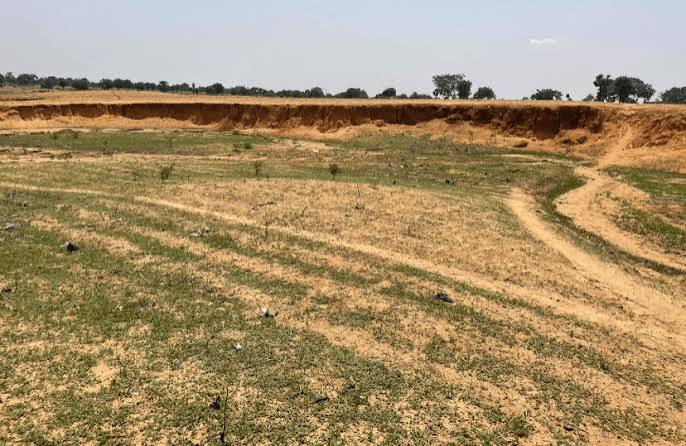
Mahmoud explained that the government rehabilitated damaged irrigation infrastructure at major locations, including Jermambaka, Kadawa Farm Centre and Bunkure A and B. The work involved clearing blocked channels and repairing canals to return previously unusable farmland to production.
He added that collaboration with the Federal Government and the African Development Bank-supported Agricultural Transformation Agenda Support Programme (ATAPS) had also helped recover additional farmland for irrigation.
The commissioner identified the major irrigation dam project at Donsushiya as another significant intervention. The project is designed to provide irrigation for approximately 500 hectares of farmland and has reached about 40 per cent completion.
According to him, a 14-kilometre access road has also been completed to enable the movement of heavy machinery and other construction equipment to the project site.
The state has also secured approval for 11 smaller dams and irrigation schemes across 11 local government areas. When completed, the projects are expected to provide approximately 2,000 additional acres of irrigable farmland.
Mahmoud said compensation had been paid in six locations, while contractors had mobilised to some of the project sites to begin work.
On agricultural planning, he said the ministry established a farmers’ database to provide reliable information for policy decisions, budgeting and the distribution of government interventions.
The commissioner also disclosed that the state and local governments had procured nearly 700 truckloads of fertiliser over the past three years for distribution to farmers across Kano’s 44 local government areas.
He recalled that the state procured more than 54 truckloads in 2024, while the Federal Government supplied approximately 70 truckloads during the same year.
To promote mechanised agriculture, the government has acquired equipment including tractors, combine harvesters, threshers, forklifts and solar-powered irrigation pumps. Rice-processing facilities are also part of the intervention.
Mahmoud said the equipment would be made available free of charge to qualified farmers’ cooperatives that meet the required standards of transparency, accountability and sound management.
In the livestock sector, the commissioner said more than 70 milk collection centres had been completed with support from the Islamic Development Bank. The facilities are expected to improve milk handling, preservation and hygiene in pastoral communities.
He also highlighted the upgrading of cattle markets and the Dawanau grain market, alongside the construction of about 72 kilometres of agricultural access roads in partnership with the Islamic Development Bank to improve the transportation of farm produce.
On efforts to reduce conflicts between farmers and herders, Mahmoud said the government had demarcated approximately 1,270 kilometres of cattle routes across the state. He attributed the reported reduction in clashes partly to the provision of designated routes for livestock movement.
The ministry has also implemented livestock support programmes targeting farmers, women and young people. According to the commissioner, beneficiaries have received livestock, including cattle, goats and rams, as well as animal feed and veterinary medicines to support production and household livelihoods.
The government says the various interventions are aimed at expanding irrigated farmland, improving agricultural productivity, supporting rural communities and strengthening food security across Kano State.
Reporting by TalkNaijaMedia

Reader Comments (0)
No comments yet. Be the first to share your perspective on this report.