

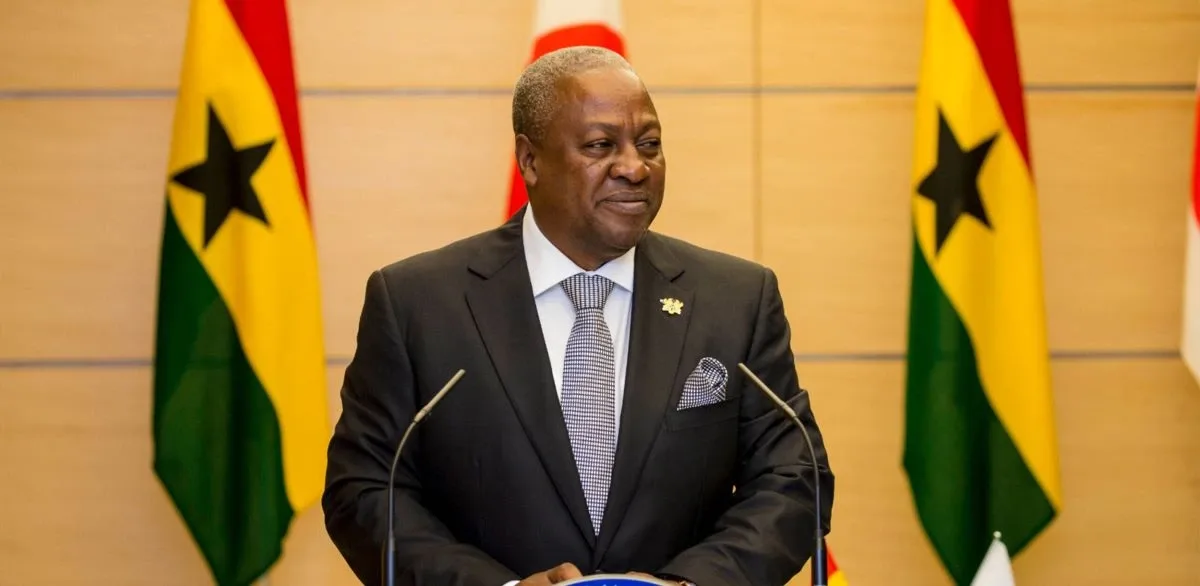
President John Mahama took office in January 2025, following the administration of former President Nana Akufo-Addo.
A comparison of the figures shows that Ghana's debt stock increased by approximately $20.2 billion between 2016 and the end of 2024, while the dollar-denominated increase between December 2024 and October 2026 stands at $15.9 billion.
Based on these figures, the average annual increase in the dollar value of the debt stock was approximately $2.5 billion during the 2016–2024 period, compared with an annualised average of about $8.7 billion between the end of 2024 and October 2026.
However, changes in the dollar value of public debt do not necessarily represent new borrowing alone. Exchange-rate movements and the valuation of existing obligations can significantly affect the reported figures.
Ghana's debt stock illustrates this distinction. The Bank of Ghana reported that total public debt stood at GH¢641.1 billion at the end of 2025, down from GH¢726.7 billion at the end of 2024. By October 2026, it had risen to a provisional GH¢759.3 billion, equivalent to 47.5 per cent of GDP.
The October figure represents a rise from the end-2025 level in local currency, even though the dollar-denominated comparison also reflects movements in the exchange rate.
Ghana has been working to recover from the severe fiscal and debt crisis that led to an International Monetary Fund-supported programme and a restructuring of parts of its domestic and external obligations.
The country has recorded improvements in some economic indicators, including lower inflation and stronger external reserves. Nevertheless, managing public debt, meeting repayment obligations and maintaining investor confidence remain important challenges.
The Bank of Ghana's 2025 annual report puts Ghana's external debt at approximately $29.4 billion at the end of December 2025, equivalent to 21.4 per cent of GDP.
The latest debt figures have also drawn attention to Nigeria's borrowing position.
According to the Debt Management Office, Nigeria's total public debt stood at ₦166.79 trillion as of June 30, 2026, compared with ₦159.35 trillion at the end of March. The increase amounted to approximately ₦7.44 trillion, or 4.7 per cent within three months.
Nigeria's debt portfolio comprised ₦91.59 trillion in domestic obligations and ₦75.20 trillion in external debt.
Separately, President Bola Tinubu on November 4, 2026, asked the National Assembly to approve a fresh external borrowing plan of approximately $7.7 billion, equivalent to ₦10.79 trillion, to help finance the 2026 budget deficit.
The proposed borrowing forms part of the government's financing plan for the 2026 budget. It is not an amount already approved and disbursed.
The developments in Ghana and Nigeria highlight the continuing fiscal pressures facing African economies and the importance of responsible borrowing, effective debt management and sustainable economic growth.
Reporting by TalkNaijaMedia
SEO Title: Ghana’s Public Debt Rises 32% to $65.3 Billion Under Mahama
Focus Keyphrase: Ghana public debt reaches $65.3 billion
Meta Description: Ghana's public debt reaches $65.3 billion in October 2026, while Nigeria reports ₦166.79 trillion in public debt and seeks approval for fresh external borrowing.




Reader Comments (0)
No comments yet. Be the first to share your perspective on this report.