

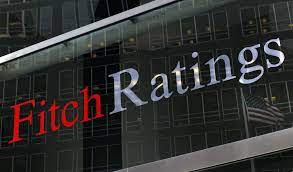
Nigeria has received a more positive assessment from international credit rating agency Fitch Ratings, which has reportedly revised the country’s economic outlook from stable to positive while maintaining its long-term credit rating at ‘B’.
The rating action, announced on October 9, 2026, signals increased confidence that Nigeria’s economic reforms could continue to support its financial position. However, the positive outlook does not mean the country has received an immediate credit rating upgrade.
The Federal Government disclosed the development in a statement issued on Saturday, October 10, by the Minister of Finance and Coordinating Minister of the Economy, Taiwo Oyedele.
According to the government, the decision reflects progress in economic reforms, stronger foreign exchange reserves and improving prospects for economic stability.
One of the major developments highlighted in the statement was the increase in Nigeria’s gross foreign exchange reserves to $54.9 billion as of September 25, 2026, compared with approximately $32 billion in mid-April 2024.
The government attributed the increase to stronger foreign exchange inflows, portfolio investment, export earnings and remittances, alongside efforts to improve the formal foreign exchange market.
Fitch was also reported to have projected a current account surplus equivalent to 6.4 per cent of gross domestic product in 2026, suggesting that Nigeria’s external earnings could continue to support its ability to meet international payment obligations.
On economic growth, the agency reportedly forecast that Nigeria’s real gross domestic product would expand by 4.3 per cent in 2026, compared with four per cent in 2025. Growth is expected to remain above four per cent in 2027 and 2028, with non-oil activities playing an important role.
Average inflation was projected to fall to 15.4 per cent in 2026, although the cost of living remains a significant concern for households and businesses.
The government also pointed to expectations that tax reforms would strengthen non-oil revenue. Fitch reportedly projected general government debt to average 32 per cent of GDP between 2026 and 2028, below the 56 per cent median for countries in the ‘B’ rating category.
The reported assessment also highlighted Nigeria’s domestic debt market and banking-sector recapitalisation efforts, noting that many banks had capital adequacy ratios above 20 per cent.
Reacting to the development, the Federal Government described the positive outlook as an endorsement of reforms introduced under President Bola Ahmed Tinubu. These include petrol subsidy removal, exchange-rate unification and changes to the tax system.
The government said its longer-term objective was to put Nigeria on a path towards investment-grade credit status, arguing that stronger economic fundamentals could help reduce borrowing costs, attract private investment and support job creation.
However, the administration acknowledged that important economic difficulties remain. These include persistent inflation, limited government revenue relative to the size of the economy and the substantial share of public revenue used to service debt.
The government said it would continue working on tax implementation, foreign exchange market stability, more efficient public spending, debt management and economic diversification.
It also emphasised the need to ensure that improvements in economic indicators translate into tangible benefits for Nigerians through job creation, food security, human development and support for small businesses.
Fitch’s reported decision follows other positive credit developments involving Nigeria. In May 2026, S&P Global Ratings upgraded the country’s sovereign credit rating from ‘B-’ to ‘B’. Moody’s had also revised Nigeria’s outlook from stable to positive in August while retaining its ‘B3’ rating.
Although the latest outlook change offers a more encouraging signal to investors, Nigeria’s longer-term progress will depend on sustaining reforms, controlling inflation, increasing public revenue and improving economic conditions for citizens.
Reporting by TalkNaijaMedia



Reader Comments (0)
No comments yet. Be the first to share your perspective on this report.