

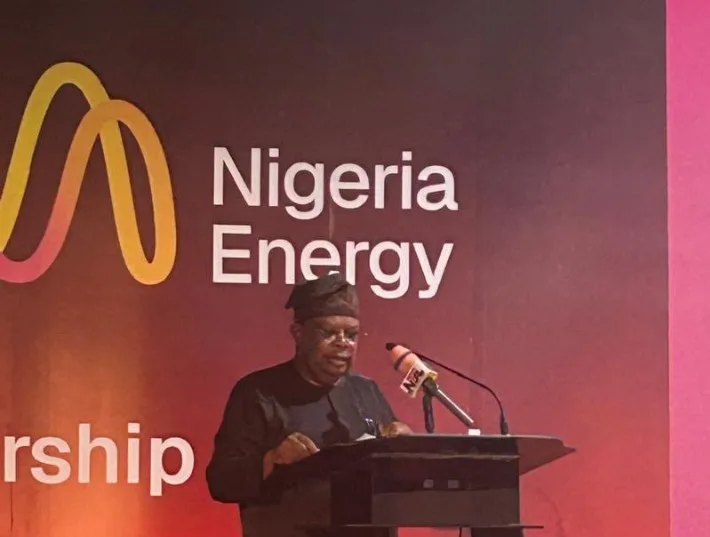
Tegbe said the debt repayment was part of a broader strategy to address liquidity challenges in the power sector, particularly those affecting gas suppliers and electricity generation companies.
He explained that the government was also working to stabilise the national grid, expand transmission infrastructure and improve the delivery of electricity to homes, businesses and industries.
The minister said the government planned to increase transmission capacity from about 5,000 megawatts to more than 19,000 megawatts to enable the network to accommodate more electricity and improve its delivery to consumers.
He put Nigeria’s electricity generation capacity at more than 13,000 megawatts, noting that inadequate transmission infrastructure remained a major obstacle to making better use of available generating capacity.
As part of efforts to address these challenges, Tegbe said a nationwide technical audit of electricity infrastructure had commenced to identify ageing facilities and determine which installations required urgent repairs, rehabilitation or replacement.
He explained that the country had been divided into three major energy zones to guide targeted interventions, with Lagos and its surrounding areas accounting for approximately half of national electricity demand. Other areas requiring improvements include Abuja, Kano and their surrounding communities.
The minister also announced that the Federal Executive Council had approved three projects aimed at strengthening the national transmission network.
The projects include the upgrading of the Katampe transmission substation, which serves the North-Central region; the design and manufacture of three 300-megavolt-ampere transformers for the Egbin transmission substation serving the Lagos axis; and the reconstruction of a 35.6-kilometre transmission line along the Shagamu axis from a single-circuit to a double-circuit line.
According to Tegbe, the projects are expected to improve transmission capacity, grid stability and the resilience of the national electricity network.
He added that the government was working to clear more than 300 containers of electricity equipment stranded at the nation’s ports. President Tinubu had directed the Ministry of Power to collaborate with the Nigerian Ports Authority and the Nigeria Customs Service to facilitate their release for use in ongoing infrastructure projects.
On grid management, Tegbe disclosed that construction had commenced on a new National Control Centre in Osogbo, Osun State, to replace the existing facility, which he said had been in operation for 64 years.
The new centre is expected to incorporate modern monitoring and control technology to improve coordination, operational efficiency and the management of electricity transmission across the country.
The minister also highlighted efforts to provide alternative electricity supplies to federal universities and teaching hospitals, reducing their dependence on the national grid.
He said 14 federal universities had been equipped with solar mini-grids with capacities ranging from one to five megawatts, while the Tertiary Education Trust Fund (TETFund) had supported 11 additional institutions.
Tegbe also cited the University of Abuja solar mini-grid project, which he said had been commissioned approximately three weeks earlier, with similar projects planned for other institutions.
In the health sector, he said solar mini-grids had been completed and energised at five teaching hospitals in collaboration with the Federal Ministry of Health.
The projects are intended to improve electricity reliability in critical public institutions, supporting essential services and reducing the impact of power interruptions.
The latest measures form part of the Federal Government’s wider efforts to address longstanding challenges in Nigeria’s electricity sector, including accumulated debts, inadequate transmission capacity, gas supply constraints and ageing infrastructure.
However, the success of the initiatives will depend on effective project implementation, sustained investment and improvements across the generation, transmission and distribution segments of the electricity value chain.
Reporting by TalkNaijaMedia




Reader Comments (0)
No comments yet. Be the first to share your perspective on this report.