

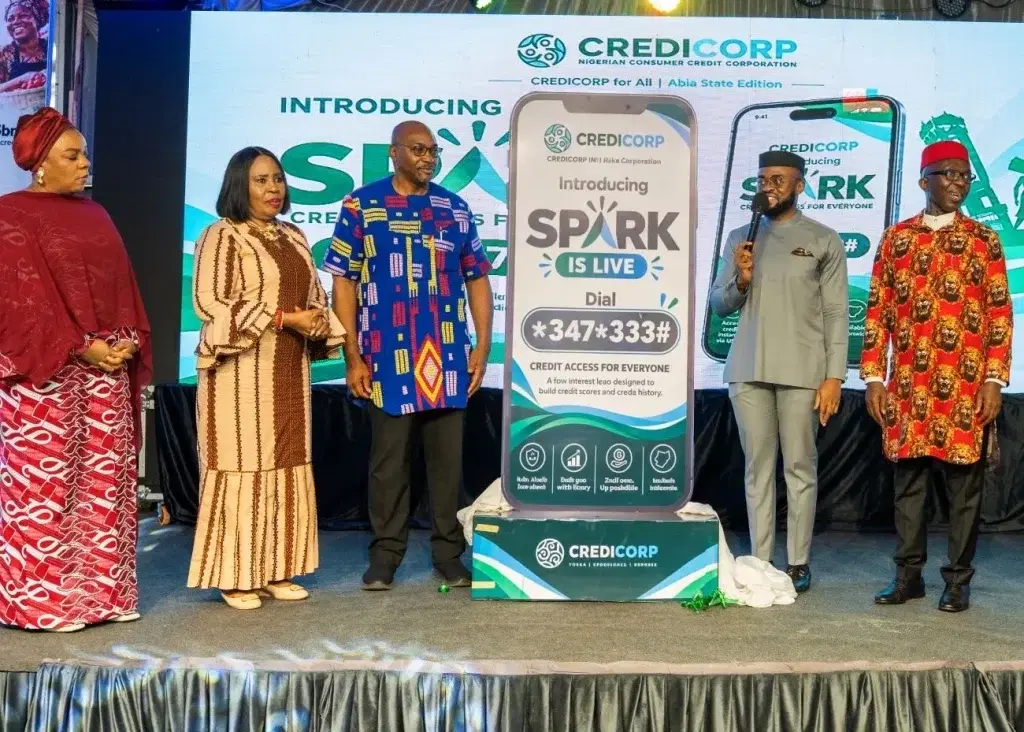
According to CREDICORP, the initiative is intended to make formal consumer credit more accessible to people who have limited or no borrowing history. Responsible borrowing and consistent repayment could help beneficiaries establish credit records and improve their future access to financial services.
The corporation said the product was being piloted and was expected to become more widely available across Nigeria before the end of 2026.
The Aba event brought together beneficiaries, financial institutions, local businesses and government representatives to demonstrate how consumer credit could support household needs and business activities.
Activities included credit-access demonstrations for market women and traders, presentations on the YouthCred initiative for young Nigerians, and the showcasing of credit-backed tricycles for transport operators.
Locally assembled tricycles were also featured under CREDICORP’s Securing Consumer Access for Local Enterprises (S.C.A.L.E.) initiative, which connects consumers with Nigerian manufacturers and vendors through financing arrangements.
Speaking at the event, CREDICORP Managing Director and Chief Executive Officer, Uzoma Nwagba, said the organisation wanted to extend consumer credit beyond conventional financial institutions and make it more accessible to working Nigerians.
He explained that the initiative was designed to support different groups, including traders seeking business financing, young people building their financial profiles and transport operators acquiring income-generating assets.
Representing Abia State Governor Alex Otti, the governor’s Chief Principal, Chinenye Mba-Uzoukwu, said the state government was working to create an environment that supports business growth, investment and responsible access to credit.
He added that improved infrastructure and a supportive business environment could help initiatives such as CREDICORP reach more traders, young people and households.
Also speaking, the Managing Director of the Ministry of Finance Incorporated and CREDICORP board member, Armstrong Ume Takang, described the programme as an example of how government-backed initiatives could support local manufacturing and expand economic opportunities.
CREDICORP disclosed that it had facilitated more than ₦53.5 billion in consumer credit for over 351,000 Nigerians since commencing operations, with women accounting for approximately 59 per cent of beneficiaries.
The corporation said its broader objective was to expand access to consumer credit and support economic participation through financing for productive assets, household needs and small businesses.
However, further details on SPARK’s eligibility requirements, borrowing limits and repayment terms were not fully disclosed in the reports announcing its pilot launch. Nigerians considering any formal credit arrangement should understand the applicable charges and repayment obligations before making a commitment.





Reader Comments (0)
No comments yet. Be the first to share your perspective on this report.