

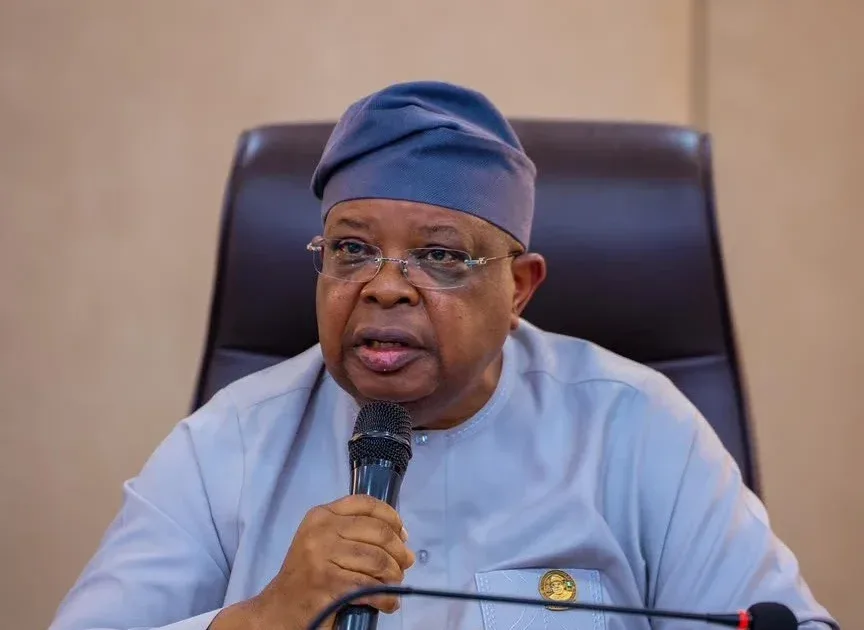
The minister said the sector continued to struggle with poor revenue collection, inadequate metering, mounting debts owed to electricity generation companies and weaknesses in the existing market structure.
According to him, electricity suppliers must be able to collect payments for the power they deliver if the industry is to become commercially viable and attract the investment needed to improve supply.
He argued that pricing reforms alone would not resolve the sector’s difficulties unless distribution companies and other operators could recover their costs and meet their financial obligations.
Tegbe also disclosed that the government was reviewing the electricity market structure and tariff assumptions in collaboration with the Nigerian Electricity Regulatory Commission (NERC).
One of the arrangements under review is the role of the Nigerian Bulk Electricity Trading Plc (NBET), the government-owned company that purchases electricity from generation companies and sells it to distribution companies.
The minister said he intended to move away from the existing NBET model, arguing that it had contributed to a system in which government intervention was repeatedly required to cover financial shortfalls.
He proposed a greater role for bilateral electricity agreements, under which producers and eligible buyers enter into commercial arrangements for electricity supply and payment.
Tegbe cited existing supply arrangements involving Mainstream Energy Solutions and the Abuja and Ikeja electricity distribution companies as examples of how direct commercial relationships could operate.
However, the proposed shift represents the minister’s reform direction; it does not, by itself, mean that NBET has been formally abolished or that the entire electricity market has already moved to bilateral trading.
The minister also identified inadequate metering as a major obstacle to revenue collection, saying Nigeria’s electricity sector had a metering gap of about 40 per cent.
He said the government had deployed more than 700,000 meters over the preceding six months and planned to install 7.5 million additional meters within the next two to three years.
Data published by NERC showed that the national metering rate reached 61.51 per cent at the end of June 2026, supporting the view that a substantial number of electricity customers still lacked meters.
Tegbe further said aggregate technical, commercial and collection losses exceeded 44 per cent, limiting the amount of revenue operators could recover from electricity supplied to consumers.
He linked the financial difficulties to outstanding debts owed to generation companies, which he estimated at approximately ₦3.3 trillion.
According to the minister, the government had introduced a bond-backed arrangement to address the accumulated liabilities and had paid between ₦1.2 trillion and ₦1.3 trillion. He said the administration intended to complete the settlement of the legacy debt by 2027.
He stressed, however, that clearing outstanding obligations would not be sufficient unless reforms prevented the debts from building up again.
Tegbe also called for better use of existing power generation infrastructure, particularly plants that remain underutilised despite their installed capacity.
He cited facilities in the Niger Delta region, including the Alaoji power plant, as examples of assets that could contribute more to electricity supply if constraints affecting their operation were addressed.
The minister said the government was considering independent transmission lines to connect underutilised plants with industrial clusters where demand for electricity is high. He added that technical audits and a review of transmission infrastructure would help determine where investment was most urgently needed.
Energy expert Gbite Adeniji, who also spoke at the conference, said restoring financial stability across the electricity value chain required the government to resolve outstanding debts and strengthen NBET’s financial position.
He explained that when power generation companies cannot receive payment for electricity supplied, they may struggle to settle their own obligations to gas suppliers, affecting fuel availability and power generation.
Adeniji called for a closer examination of costs in the upstream gas sector, warning that inefficiencies could be passed through to electricity consumers if pricing and regulatory oversight were inadequate.
He also urged regulators to ensure that domestic gas supply arrangements were implemented effectively so that power plants could obtain the fuel required to operate.
The Chief Executive of the Nigerian Upstream Petroleum Regulatory Commission (NUPRC), Oritsemeyiwa Eyesan, acknowledged that gas pricing and payment difficulties had affected the energy sector.
She said arrangements involving royalty gas and the Federal Government’s debt-resolution initiative had helped address some outstanding obligations, although challenges remained.
Eyesan also highlighted the completion of the OB3 gas pipeline, which is intended to improve the movement of natural gas from southern Nigeria towards other parts of the country. She said the infrastructure was important for expanding gas distribution and supporting additional supply to power plants and other users.
She further pointed to the Petroleum Industry Act’s drill-or-drop provisions, which are designed to discourage operators from leaving petroleum assets undeveloped indefinitely.
Meanwhile, the Chief Executive of the Nigerian Midstream and Downstream Petroleum Regulatory Authority (NMDPRA), Rabiu Umar, rejected suggestions that disagreements between the NUPRC and NMDPRA were obstructing investment.
Umar said both regulators were working together to improve the investment environment and implement the Petroleum Industry Act. He also highlighted the Midstream and Downstream Gas Infrastructure Fund as a mechanism intended to support infrastructure investment and reduce risks associated with gas projects.
The discussions underscored how closely Nigeria’s electricity supply depends on the financial health of the wider energy sector, including gas production, transportation, power generation, transmission and distribution.
While the government is pursuing debt repayment, additional metering and changes to electricity market arrangements, the long-term challenge will be ensuring that suppliers are paid, infrastructure is used effectively and consumers receive more reliable electricity.
Tegbe’s remarks signal an intention to reduce dependence on government-funded tariff shortfalls. However, the proposed market changes will require regulatory decisions and effective implementation, while the government has not announced in these remarks that an immediate electricity tariff increase is planned.
Reporting by TalkNaijaMedia


Reader Comments (0)
No comments yet. Be the first to share your perspective on this report.