

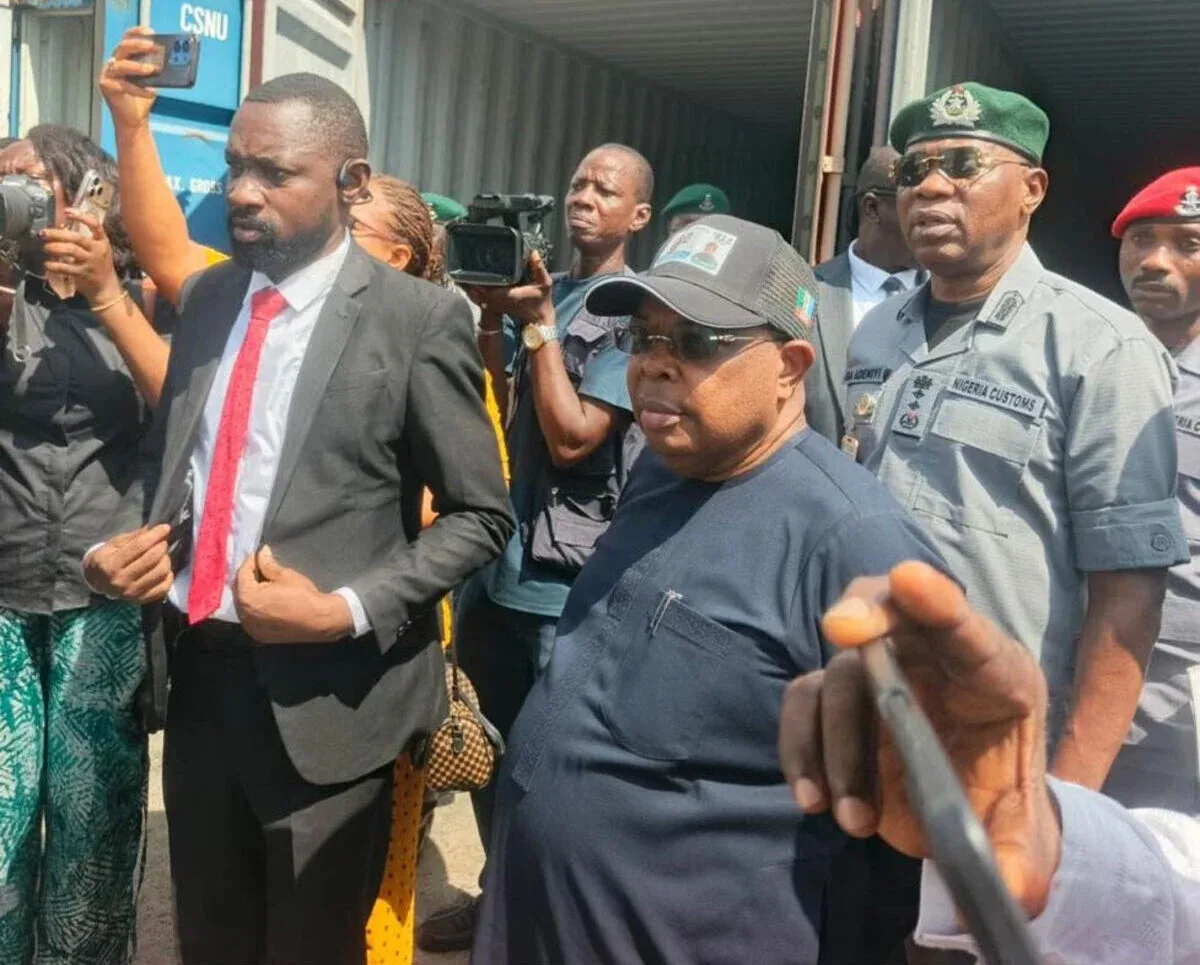
The Comptroller-General of Customs, Bashir Adewale Adeniyi, announced the development during the exercise at ENL Consortium Terminal in Apapa, Lagos, alongside the Minister of Power, Joseph Olasunkanmi Tegbe.
Adeniyi explained that the 98 containers were part of more than 300 consignments of electricity infrastructure equipment that had remained uncleared at Apapa, Tin-Can Island and other ports.
The consignments include transformers, electrical cables, switchgear and other transmission materials originally imported for government-backed projects involving the Federal Ministry of Power, the Transmission Company of Nigeria (TCN) and the Niger Delta Power Holding Company (NDPHC).
According to the Customs chief, the first 44 containers were flagged off for evacuation from ENL Terminal, while another 54 containers at other terminals were approved for subsequent release.
He said the clearance followed a presentation by the Minister of Power to the Federal Executive Council, after which President Tinubu directed the immediate release of the equipment and instructed relevant agencies to resolve outstanding charges and administrative delays.
Adeniyi disclosed that Customs had introduced special measures to accelerate the process, including priority processing, dedicated officers for joint examinations and the implementation of approved waivers on accumulated charges.
He particularly acknowledged the Minister of Finance and Coordinating Minister of the Economy, Taiwo Oyedele, for approving waivers on the outstanding charges associated with the consignments.
The Customs boss added that the service was working with the Ministry of Power, TCN, NDPHC, the Nigerian Ports Authority and other stakeholders to ensure that the remaining clearance procedures were completed without further delays.
He explained that the equipment would undergo technical assessments after evacuation to determine which items were still suitable for use. Serviceable materials would be allocated to ongoing and unfinished transmission projects, while obsolete equipment would be disposed of in line with expert recommendations and applicable regulations.
Speaking at the event, Tegbe described the development as an important step towards recovering public infrastructure investments and strengthening Nigeria’s electricity transmission network.
He said the equipment had originally been procured to expand transmission capacity, improve substations and address operational challenges across the national electricity network.
According to the minister, keeping the materials at the ports for years had prevented their intended use, while existing substations continued to operate under pressure because the additional equipment was unavailable.
Tegbe thanked President Tinubu for approving the release and commended the Customs Service for its cooperation in resolving the longstanding challenge.
He said engineers would verify the inventory, inspect the condition of the recovered materials and conduct the necessary technical tests before determining their deployment.
The minister identified Kaduna, Lafia and Kwale among locations expected to benefit from some of the equipment, adding that other projects would also receive materials based on their technical requirements.
He noted that some items were relatively new, while others might require repairs or additional interventions before they could be installed.
The minister stressed that the government's priority was to ensure that the recovered equipment moved beyond the ports and was eventually put to productive use in the electricity sector.
The exercise also drew attention to the need for better coordination between government agencies, contractors and port operators to prevent public infrastructure materials from remaining unused for extended periods.
With the evacuation now underway, the next major task will be establishing the condition of the equipment, completing its deployment and ensuring that the recovered assets contribute meaningfully to improvements in Nigeria's electricity transmission system.
Reporting by TalkNaijaMedia


Reader Comments (0)
No comments yet. Be the first to share your perspective on this report.