

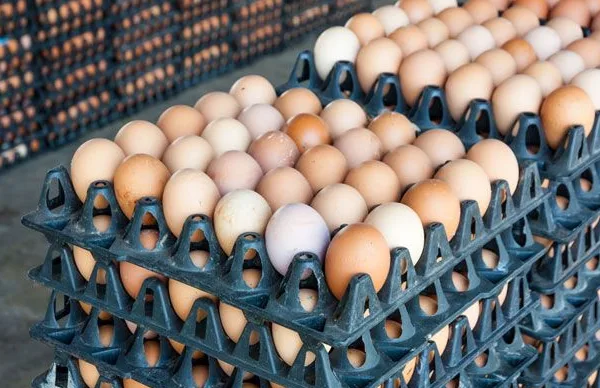
A poultry manager at Nibanola Farms, Adedoye Adedolapo, acknowledged the drop in feed prices but explained that it would take time before the change could affect egg production costs and market prices.
Adedolapo said his farm produces its own feed using raw materials, including maize and oats, at an estimated cost of ₦12,800 per bag. He added that egg prices are influenced by several factors beyond the cost of poultry feed.
According to him, retailers also factor in transportation and other operating expenses when determining how much consumers pay for a crate of eggs. He noted that farmers have limited control over the final prices charged by retailers.
He identified the cost of fuel and transportation as additional pressures on the poultry value chain and called on the government to provide grants and other forms of support to farmers to help lower production costs.
A poultry feed seller, Omolayo Fagbemi, also confirmed that prices of some popular brands, including Ultima, Chikun, Vital and Hope Feeds, had declined in recent weeks.
Fagbemi explained that poultry farmers had spent several months purchasing feed at higher prices before the recent reduction. As a result, she said, the decline would not immediately reflect in egg prices, as farmers still needed to recover some of their previous production expenses.
She also pointed to changing seasonal demand as a possible factor. According to her, some poultry farmers were shifting towards raising broiler chickens for the festive season, potentially reducing the number of farmers focusing on egg production.
The development highlights the different factors that determine egg prices, including feed costs, transportation, fuel expenses, production decisions and market supply.
Although the reduction in feed prices offers some relief to poultry farmers, consumers may have to wait before any meaningful change becomes visible in the retail cost of eggs.
Reporting by TalkNaijaMedia





Reader Comments (0)
No comments yet. Be the first to share your perspective on this report.