

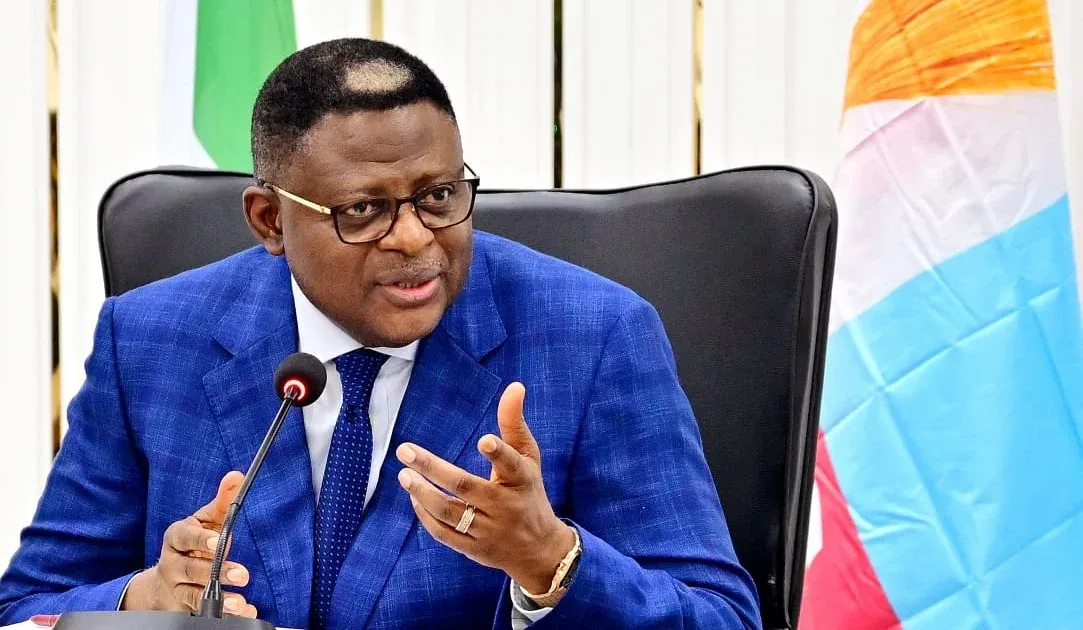
According to the governor, Cross River inherited a domestic debt burden of more than ₦204 billion when his administration assumed office. He said the outstanding figure had dropped to approximately ₦132.3 billion as of March 2026 without the state obtaining fresh loans.
He also reported an increase in the state’s internally generated revenue (IGR), which rose from ₦21.1 billion in 2022 to ₦46.3 billion in 2024. He attributed the improvement to stronger revenue collection and better financial management.
Otu said his administration’s initial priority was to stabilise the state’s finances, recover public assets and restore abandoned projects before moving towards broader economic development.
Among the achievements he highlighted was the recovery of Tinapa from the Asset Management Corporation of Nigeria (AMCON), alongside the recovery of nearly ₦1 billion from Etung Cocoa Estates.
He also said the government was pursuing efforts to reclaim the state’s oil interests and protect its position in the Bakassi area and the proposed Deep Seaport project.
On workers’ welfare, the governor said his administration had lifted the employment embargo, returned more than 3,000 local government workers to the payroll and commenced the payment of gratuities after nearly two decades.
Otu also listed infrastructure and institutional development projects, including the reconstruction of the Obudu Cargo Airport runway, the revival of the Teachers Continuous Training Institute in Biase and the conversion of the College of Education, Akamkpa, into the University of Entrepreneurship.
He added that his government was investing in agriculture, particularly cocoa, rice, potatoes, oil palm and cassava, as part of efforts to improve food production and create employment opportunities in rural communities.
The governor further disclosed that more than 200 kilometres of fibre infrastructure had been deployed in Calabar, while over 600 residents had received information and communications technology training.
He described Cross River’s selection for the World Bank GovTech Team’s 2026 AI in Governance and Public Administration Bootcamp in Seoul, South Korea, as recognition of the state’s efforts to improve digital governance.
Looking ahead to a possible second term, Otu said his priorities would include converting recovered public assets into productive ventures, completing major infrastructure projects, expanding youth and agricultural enterprise programmes, establishing industrial parks across the state’s three senatorial districts and improving workers’ welfare.
He urged members of the newly inaugurated campaign council to communicate the administration’s achievements and plans to residents across the 18 local government areas and 196 wards.
The governor maintained that the 2027 election campaign should focus on development records, policies and the future of Cross River State rather than political personalities.
Defending the need for continuity, Otu compared his administration’s development efforts to a farmer preparing land for planting and a builder laying the foundation of a project, arguing that ongoing work should be sustained to achieve lasting results.



Reader Comments (0)
No comments yet. Be the first to share your perspective on this report.