

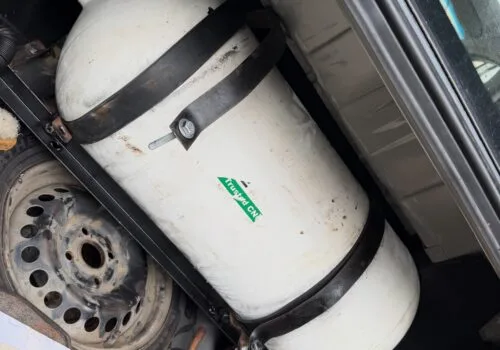
CNG is not a new or experimental transport fuel. Countries such as Iran, Egypt, China, India and Pakistan have developed natural-gas vehicle markets over many years. Their experiences demonstrate that the fuel can support commercial transport when it is backed by reliable gas supplies, refuelling stations, appropriate vehicle technology and effective regulation.
For Nigeria, the question is therefore not simply whether vehicles can run on CNG. It is whether the country can build a dependable system that makes the fuel accessible, affordable and safe for everyday motorists.
Nigeria’s transport sector has traditionally relied heavily on petrol and diesel. This leaves the cost of moving people and goods exposed to changes in fuel prices, foreign-exchange pressures and disruptions to petroleum supply. For a country with substantial natural gas reserves, greater domestic use of gas in transportation offers a way to diversify its energy mix.
CNG is not intended to replace every petrol-powered vehicle, nor does it mean that petrol will disappear. Electric vehicles are also becoming part of the transport transition, and different technologies will serve different needs. However, CNG has a practical advantage for many existing vehicles because suitable models can be converted to operate on gas while retaining their petrol systems.
This bi-fuel arrangement allows drivers to use CNG where refuelling is available and switch to petrol when necessary. It can provide a route into alternative-fuel transport without requiring motorists to replace their vehicles altogether.
The economic argument is particularly important for commercial drivers. Fuel is a recurring expense for taxis, buses, tricycles and logistics vehicles that cover long distances every day. If CNG reduces the cost of operating a vehicle, the savings can accumulate over time and potentially improve earnings or create room for lower fares.
However, the actual savings depend on gas and petrol prices, vehicle efficiency, conversion costs, maintenance and access to refuelling stations. The benefits are therefore greatest when drivers can obtain fuel conveniently and the cost of converting and maintaining their vehicles remains manageable.
Nigeria has begun applying this principle through the Presidential Initiative on Compressed Natural Gas and Electric Vehicles, known as Pi-CNG & EV. The programme is expanding conversion facilities, refuelling infrastructure and the deployment of alternative-fuel vehicles in collaboration with public and private-sector partners.
The impact is beginning to show in some public transport services. In the Federal Capital Territory, official figures published by the initiative in October 2026 put fares on the Kubwa–Berger route at ₦500 for participating CNG buses, compared with ₦1,000 on diesel-powered buses. The Berger–Gwagwalada route was listed at ₦700 on the CNG service, compared with ₦1,200 on conventional buses.
Enugu State has also recorded a notable reduction on the Enugu–Nsukka route. According to the initiative, fares that previously ranged between ₦3,000 and ₦4,000 fell to ₦1,600 on its CNG-supported service. Some other commercial operators subsequently reduced their fares, although their prices remained higher than the subsidised service.
These examples illustrate why the success of alternative-fuel policy should not be measured only by the number of converted vehicles or refuelling stations. The more important question is whether lower operating costs translate into meaningful relief for passengers and transport operators.
When one operator can charge less because of lower fuel expenses, competitors may face pressure to review their own prices. Such effects can extend the benefits beyond the vehicles directly supported by the programme. Nevertheless, sustained fare reductions will depend on operating costs, service availability and how transport providers choose to pass savings on to customers.
International experience offers useful lessons. Iran has developed an extensive natural-gas vehicle market, while Egypt has spent years expanding vehicle conversions and refuelling infrastructure. Both countries have sought to make greater use of domestic natural gas and reduce reliance on conventional liquid fuels in transportation.
Egypt’s programme demonstrates the value of sustained policy support. Government figures published in 2024 reported approximately 540,000 vehicles converted to natural gas and about 1,000 filling stations. The country’s experience shows that developing a substantial market takes long-term investment, incentives and coordination between fuel suppliers, vehicle owners and infrastructure providers.
The wider lesson is that vehicle conversions cannot grow sustainably without the infrastructure to support them. If the number of CNG vehicles increases faster than the number of reliable stations, motorists may encounter queues, long detours and fuel shortages. Conversely, stations built without sufficient demand may struggle to operate efficiently.
A successful CNG market must therefore function as an integrated system. Conversion centres, gas supplies, refuelling stations, trained technicians, financing, safety standards and regulation all need to develop together.
Nigeria’s own efforts to introduce natural gas as a vehicle fuel date back decades, including pilot activity by the Nigerian Gas Company in the late 1980s. However, adoption remained limited for many years. The removal of petrol subsidies in 2023 intensified the search for more affordable alternatives and gave renewed urgency to efforts to expand CNG use.
The scale of the programme has since increased. Figures published by Pi-CNG & EV and the Federal Government in October 2026 put the number of converted vehicles at more than 120,000, with over 400 certified conversion centres and more than 90 refuelling stations. The initiative has also reported thousands of technicians trained and significant private-sector investment in the developing value chain.
These figures represent an important expansion, but they should not be mistaken for evidence that Nigeria has already caught up with long-established CNG markets. The country still needs broader coverage, consistent service and sufficient refuelling capacity to make the fuel a dependable option across more locations.
The potential benefits extend beyond the amount motorists spend at the pump. Conversion centres require technicians, while stations need operators, maintenance workers and logistics support. A larger market can create opportunities for equipment suppliers, cylinder inspectors, trainers, financiers and local businesses involved in vehicle servicing and distribution.
Greater use of domestically produced gas could also help Nigeria retain more value within its economy and reduce some exposure to imported petroleum products. These benefits, however, depend on reliable supply, competitive prices and investment across the entire gas-to-transport chain.
The environmental case also requires a balanced assessment. CNG can reduce certain harmful air pollutants compared with conventional petrol and diesel use, particularly in some applications. However, natural gas remains a fossil fuel, and its climate benefits depend partly on engine performance and the prevention of methane leakage during production, processing and distribution. It should not be presented as a zero-emission solution.
For Nigeria, the immediate priority is to make the transition practical for ordinary motorists. Refuelling stations must be available where vehicles operate, and supply must be reliable enough to prevent long queues and unnecessary journeys in search of gas.
Safety and quality standards are equally important. Conversions should be carried out by trained personnel using approved equipment, while cylinders and related systems must receive appropriate inspection and maintenance. Poor installations and unreliable service could undermine public confidence in the programme.
Financing also matters. Even when CNG offers lower running costs, the initial expense of converting a vehicle can discourage drivers who already face financial pressure. Accessible financing and transparent information about expected savings could help more eligible motorists assess whether conversion makes economic sense for them.
Most importantly, the savings must be visible to the public. If transport operators enjoy lower fuel costs but passengers see no improvement in fares or service, people will question the value of the policy. Clear reporting on costs, route prices and service performance would help Nigerians judge the results for themselves.
Nigeria should also avoid replacing an excessive dependence on petrol with dependence on a single alternative fuel. A more resilient transport system can include petrol, CNG, electric vehicles and other suitable technologies, depending on the vehicle, route and available infrastructure.
Iran and Egypt demonstrate that sustained investment can support large natural-gas vehicle markets. Nigeria can learn from their experience without assuming that the same policies will produce identical results in a different economic and infrastructure environment.
The expansion of Pi-CNG & EV is an important beginning, but the long-term test will be how reliably the system serves motorists across the country. That requires more refuelling stations, dependable gas supply, competent technicians, sound safety oversight, accessible conversion financing and effective coordination between government and private operators.
Ultimately, the value of the transition will not be measured by announcements alone. It will be measured by whether transport operators can run their vehicles more economically, whether services become more reliable and whether passengers can afford to travel.
For the Nigerian boarding a bus on Monday morning, the most important question is straightforward: does the journey cost less, and can the service be relied upon?
If the answer increasingly becomes yes, CNG will have demonstrated its value not merely as an alternative fuel, but as a practical part of Nigeria’s wider effort to make transportation more affordable and its energy system more resilient.
Reporting by TalkNaija Media




Reader Comments (0)
No comments yet. Be the first to share your perspective on this report.