

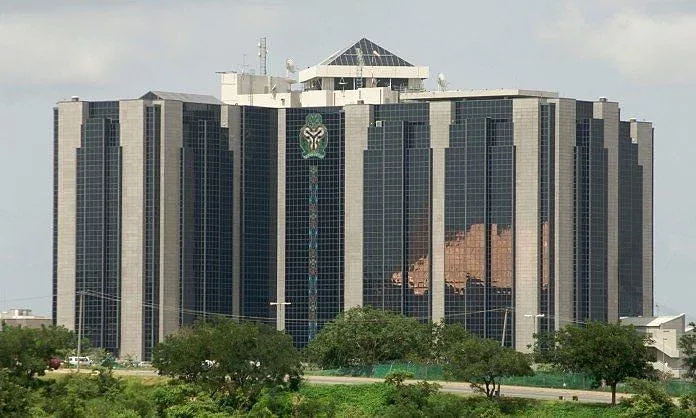
The research, titled “Budget Deficit Dynamics and Macroeconomic Performance in Nigeria,” was authored by Ndubuisi E. Uguru and examined the relationship between government fiscal deficits and key economic indicators using annual data covering 1981 to 2024.
Using a Vector Autoregressive (VAR) model, the study identified persistent fiscal imbalances as a major source of exchange rate instability, warning that continued deficits could also limit the effectiveness of monetary policy and affect private-sector investment.
Nairametrics+1
The study found that budget deficits accounted for a significant share of exchange rate fluctuations, contributing to sustained depreciation of the domestic currency. It also linked fiscal imbalances to delayed increases in interest rates and a possible contraction in money supply, which the researcher associated with defensive monetary tightening by the CBN.
The research further indicated that fiscal deficits could become self-reinforcing. According to its findings, deficits accounted for all their own variations at the initial stage of the analysis and retained about 53 per cent of that influence by the tenth period.
However, the study did not establish a statistically significant direct relationship between budget deficits and inflation. It suggested that inflationary pressures in Nigeria were more closely associated with supply disruptions, structural weaknesses and the impact of exchange rate movements on domestic prices.
The researcher described the situation as an example of fiscal dominance, where government borrowing and spending requirements can restrict the central bank’s ability to pursue monetary stability independently.
To address the challenges, the study recommended introducing a legally binding fiscal rule that would place limits on budget deficits relative to the country’s Gross Domestic Product (GDP).
It argued that such a framework could help control government borrowing, reduce competition between the public and private sectors for available funds and ease pressure on interest rates.
The research also proposed establishing a non-oil Fiscal Stabilisation Fund and improving the management of foreign reserves to strengthen Nigeria’s ability to withstand external economic shocks.
Other recommendations included encouraging domestic production, adopting strategic trade policies to reduce import dependence and establishing a transparent framework for coordinating fiscal and monetary policies.
The researcher also called for measures to improve private-sector access to credit, reduce borrowing costs and stabilise inflation expectations to encourage investment and support long-term economic growth.
The findings come as the Federal Government continues to rely on borrowing to finance its annual expenditure.
President Bola Tinubu initially presented the 2026 budget with a proposed deficit of ₦23.85tn in December 2025. However, the Federal Government’s borrowing plan was subsequently increased to ₦29.20tn, while the revised fiscal deficit rose to approximately ₦31.46tn following adjustments to the budget.
The State House, Abuja+1
The development has renewed concerns about the impact of government borrowing on exchange rate stability, interest rates and the availability of credit for businesses.
Meanwhile, the Central Bank of Nigeria reset its Monetary Policy Rate (MPR) from 26.5 per cent to 23 per cent at its September 2026 Monetary Policy Committee meeting. The decision represented a 350-basis-point adjustment after the committee had retained the rate at 26.5 per cent in July.
The CBN described the September decision as a reset of the policy rate and a recalibration of its monetary policy framework. It also adjusted the standing facilities corridor while retaining existing cash reserve requirements for deposit money banks.
Central Bank of Nigeria+2
Despite the adjustment, the study suggests that persistent fiscal imbalances could continue to complicate efforts to achieve exchange rate stability, reduce borrowing costs and encourage private investment.
The findings add to the debate over the need for stronger fiscal discipline and better coordination between the Federal Government and the monetary authorities.
Reporting by TalkNaijaMedia




Reader Comments (0)
No comments yet. Be the first to share your perspective on this report.