

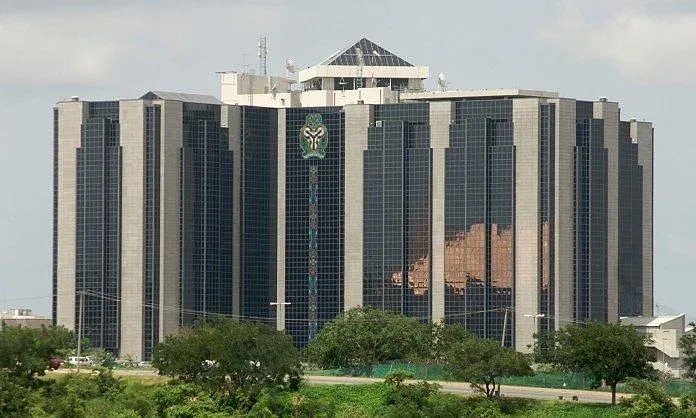
Under Section 15.2, companies holding a Class 2 Foreign Currency Issuer Licence must maintain minimum paid-up capital of ₦15 billion upon entry and throughout their operations. The CBN also reserves the right to prescribe a higher amount where necessary.
The framework establishes different capital thresholds for operators depending on the nature of their activities. Issuers of naira-referenced stablecoins, classified as Class 1, are required to maintain at least ₦10 billion in paid-up capital, while providers of other covered non-security virtual asset services must maintain a minimum of ₦1 billion.
The ₦1 billion requirement also applies to operators holding relevant authorisations under the framework, including businesses that already have licences from the Securities and Exchange Commission (SEC). Such companies cannot use the same capital to satisfy both regulators' requirements.
The CBN explained that the capital requirements are intended to provide financial protection against the risks associated with issuing stablecoins and operating virtual asset services.
Under the regulations, the Bank can also demand additional capital based on an operator's transaction volumes, market significance, redemption obligations, technological risks, concentration of activities and potential impact on the wider financial system.
The framework further makes clear that regulatory capital must remain separate from stablecoin reserves, customer funds, the CBN reserve deposit and operational liquidity. This means companies cannot count the same funds towards multiple regulatory obligations.
Eligible capital must be maintained in designated cash accounts with the CBN or in approved Federal Government securities held under arrangements that give the Bank the required control.
Companies that fall below their prescribed capital levels must notify the CBN immediately and submit a capital restoration plan within 10 business days. The regulator may restrict new token issuance, customer onboarding or other activities until the shortfall is corrected.
Beyond the capital requirements, the new framework introduces strict rules governing the assets backing stablecoins.
Issuers must maintain reserve assets equivalent to at least 100 per cent of their outstanding stablecoin obligations. They must also maintain an additional overcollateralisation buffer of at least two per cent of the value of stablecoins in circulation to absorb possible valuation losses and operational liabilities.
The regulations prohibit issuers from creating new stablecoin tokens before receiving and holding equivalent eligible reserve assets. This is intended to prevent the issuance of tokens without adequate backing.
Stablecoin holders are also entitled to redeem their tokens at face value in the relevant reference currency. Under normal circumstances, valid redemption requests must be processed no later than the end of the next business day, and issuers are prohibited from charging fees for standard redemptions.
The CBN has also prohibited algorithmic stablecoins that depend primarily on changes in token supply or demand to maintain their value without adequate reserve backing. Tokens that reference fiat currencies but are backed mainly by other virtual assets are also prohibited.
The regulations introduce additional supervisory requirements for stablecoins considered systemically important. A stablecoin may fall into this category if its circulating value exceeds ₦500 billion for 30 consecutive days or if it is held or used by more than five million people in Nigeria.
Such operators will face enhanced regulatory oversight, including continuous reserve reporting, more frequent stress testing and additional recovery and resolution requirements.
The framework extends beyond stablecoin issuance to cover cryptocurrency exchanges, digital wallets, custody services, payment gateways, remittance providers, payment and settlement services, and platform-facilitated peer-to-peer transactions involving regulated tokens.
Operators covered by the rules must comply with requirements relating to customer identification, anti-money laundering, counter-terrorist financing, transaction monitoring, cybersecurity, consumer protection and regulatory reporting.
Foreign companies are not automatically exempt from the requirements because they operate outside Nigeria. The regulations apply to relevant activities directed at Nigerian customers, even where the operator does not maintain a physical office in the country.
However, the CBN clarified that virtual assets classified as securities, investment products or other capital market instruments remain under the jurisdiction of the SEC. Both regulators are expected to coordinate where their responsibilities overlap.
In explaining the objectives of the new framework, the apex bank said it was designed to promote responsible innovation, strengthen the integrity of Nigeria's financial system and establish appropriate safeguards for emerging digital payment instruments.
The regulations mark a significant development in Nigeria's approach to virtual asset supervision, placing greater emphasis on the financial strength of operators, transparency of reserves, protection of customers and accountability across the digital asset market.
Reporting by TalkNaijaMedia





Reader Comments (0)
No comments yet. Be the first to share your perspective on this report.