

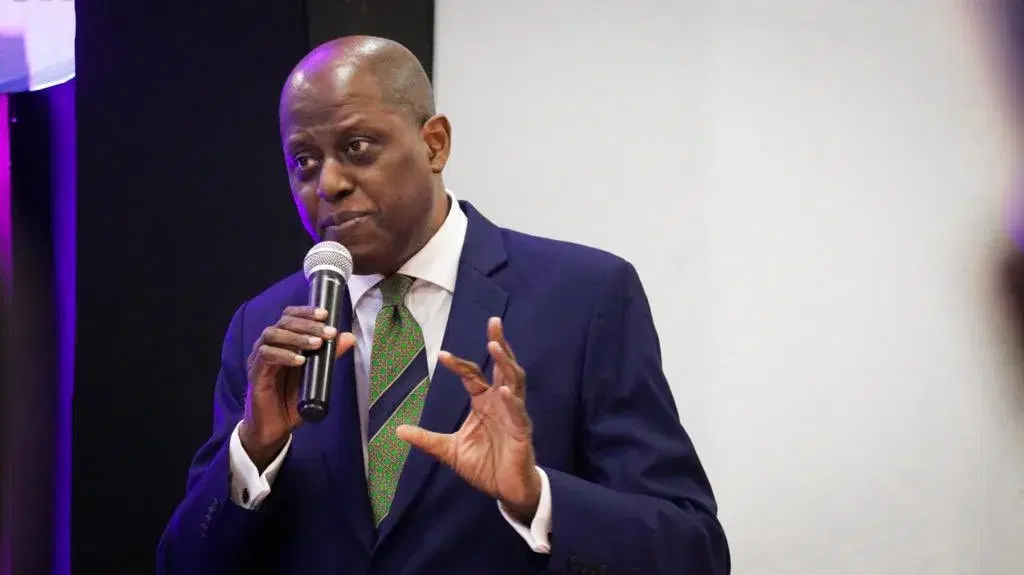
He said Nigeria needed to sustain the progress recorded through ongoing economic reforms and build an environment where businesses and investors could make long-term commitments with greater confidence.
According to the CBN governor, the apex bank would continue to prioritise price stability, improve the foreign exchange market and strengthen the economy’s ability to withstand external shocks. He also emphasised that monetary policy decisions would remain guided by economic data and communicated clearly to businesses, households and investors.
Cardoso described the recent decline in inflation as an important development but warned that the improvement must be sustained. Nigeria’s headline inflation rate fell to 14.63 per cent in September 2026 from 15.39 per cent in August, according to figures released by the National Bureau of Statistics.
He said a more predictable inflation environment would help businesses manage costs, plan operations and make better investment decisions. However, the governor maintained that monetary policy must continue to reflect prevailing economic conditions until price stability is firmly established.
Cardoso also reiterated the CBN’s medium-term ambition of bringing inflation into single digits. He stressed that Nigeria’s monetary policy decisions must reflect the country’s economic realities rather than simply imitate the actions of other central banks.
On the foreign exchange market, he said stronger external reserves and improved market conditions were helping to reinforce investor confidence. Nigeria’s gross foreign exchange reserves had exceeded $55 billion, reaching their highest level in more than 18 years, according to figures disclosed by the CBN in September 2026.
The governor also highlighted diaspora remittances as an important source of foreign exchange, saying the CBN was working to channel more of these inflows through formal financial institutions. He said expanding formal remittance channels could help diversify foreign exchange earnings and reduce dependence on traditional sources.
Beyond monetary policy, Cardoso called for greater mobilisation of domestic and international capital to finance infrastructure, businesses and other productive sectors. He said deeper capital markets and stronger cooperation with development finance institutions, including the Africa Finance Corporation, could help translate economic stability into funding for the real economy.
He also pointed to the banking sector recapitalisation programme as evidence of investor participation in Nigeria’s financial system. The CBN reported in April 2026 that banks had raised ₦4.65 trillion in fresh capital, with 72.55 per cent sourced from domestic investors and the remainder from international investors.
Cardoso said the stronger capital base should improve the banking sector’s resilience and its capacity to support businesses and economic activity. He added that maintaining sound governance and confidence in the financial system would remain important as economic conditions evolve.
The CBN governor said the ultimate goal of the country’s economic policies was to ensure that improvements in macroeconomic stability translated into greater investment, increased production and more employment opportunities for Nigerians.
Reporting by TalkNaija Media



Reader Comments (0)
No comments yet. Be the first to share your perspective on this report.