

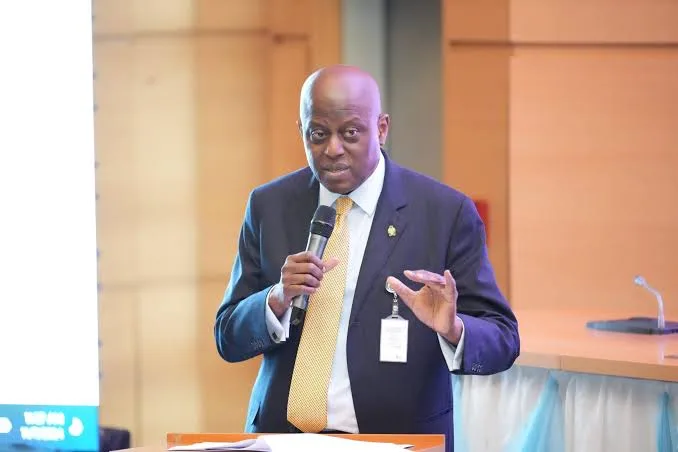
Central Bank of Nigeria (CBN) Governor Olayemi Cardoso has intensified Nigeria’s financial-sector engagement with Asian markets following a series of high-level meetings in Singapore aimed at deepening institutional cooperation, attracting investment and promoting financial innovation.
The engagements, held ahead of the 2026 IMF-World Bank Annual Meetings in Bangkok, included discussions with the Monetary Authority of Singapore (MAS), a reported Memorandum of Understanding with the Global Finance & Technology Network (GFTN) and the Nigeria-Asia Financial Connectivity Dialogue.
The dialogue was convened by the CBN in partnership with J.P. Morgan, Nigerian Exchange Group (NGX) and FMDQ Group, bringing together investors, financial institutions, businesses and Nigerians based across Asia.
Speaking at the forum, Cardoso said Nigeria’s ongoing financial-sector reforms were designed to create markets that are deeper, more liquid and better connected to the international financial system.
He highlighted reforms to the foreign-exchange market, saying the changes were intended to reduce distortions, improve transparency and provide greater certainty for participants.
The CBN has previously documented its move away from multiple foreign-exchange windows towards a more unified market structure. The Bank says the reforms were designed to allow market forces to play a greater role in determining exchange rates, reduce arbitrage opportunities and improve transparency.
Cardoso also stressed the importance of credible monetary policy, stronger governance and predictable regulations in attracting long-term capital.
According to the governor, stabilising financial markets should be viewed as a foundation for broader reforms that can improve market infrastructure and encourage greater participation by both domestic and international investors.
The Singapore engagement also placed financial technology at the centre of discussions.
The CBN reportedly signed an MoU with GFTN to provide a framework for cooperation between Nigerian and Singaporean financial and innovation ecosystems. The partnership is expected to create opportunities for institutions in both countries to explore developments in fintech and emerging financial services.
GFTN was established in Singapore as a platform focused on financial technology, innovation and the development of financial ecosystems, building on Singapore's wider fintech infrastructure.
Cardoso has previously identified technology and innovation as important components of Nigeria's financial-sector development. The CBN's recent initiatives include the Nigeria Payments System Vision 2028, which the Bank describes as a framework for developing a more inclusive and innovation-driven payments ecosystem.
At the Singapore dialogue, discussions reportedly covered Nigeria's reform programme, capital formation, foreign-exchange market confidence and the infrastructure required to support greater international participation.
The session was moderated by J.P. Morgan's Chief Economist for Africa, Gbolahan Taiwo, and featured senior representatives from NGX, FMDQ Group and the CBN.
The focus on Asia reflects Nigeria's broader effort to expand its network of financial and investment partners beyond traditional markets.
For the CBN, the objective is not simply to attract foreign capital but also to establish stronger relationships between financial institutions, businesses and markets that can support investment and financial innovation over the longer term.
The Singapore meetings are also part of a wider programme of engagement across Asia, with further discussions reportedly planned in Beijing.
Nigeria's renewed push for international financial connectivity comes as the CBN continues to implement reforms aimed at improving the functioning of the foreign-exchange market, strengthening the financial system and building investor confidence.
The Bank's own record of reforms shows that exchange-rate management, banking-sector recapitalisation, fintech regulation and payments infrastructure have been central parts of the reform programme under Cardoso.
The latest Asian engagements therefore represent another step in Nigeria's effort to connect its financial markets with global capital and technology networks while creating conditions for increased investment and institutional cooperation.
Reporting by TalkNaijaMedia

Reader Comments (0)
No comments yet. Be the first to share your perspective on this report.