

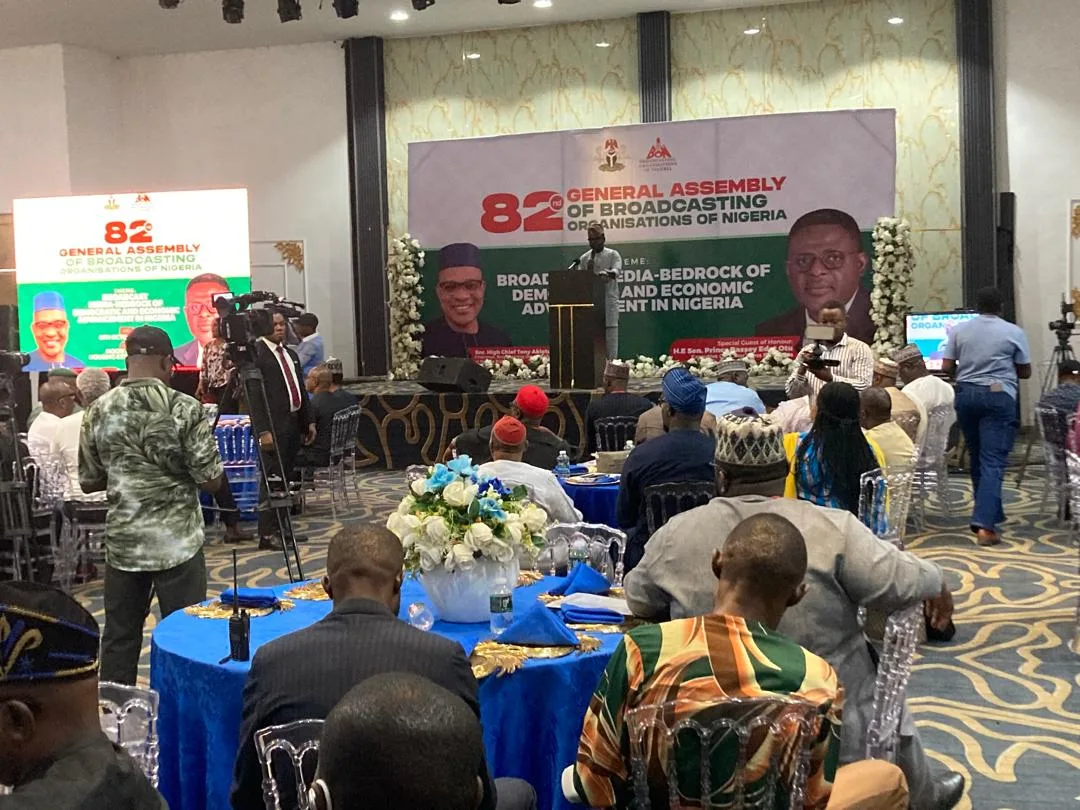
The Broadcasting Organisations of Nigeria (BON) has called for stronger protection of journalists and more supportive policies for the broadcast industry ahead of Nigeria’s 2027 general elections.
The call was made during the opening of BON’s 82nd General Assembly in Calabar, Cross River State, where more than 100 broadcast media executives are expected to deliberate on the challenges confronting the industry. The meeting is being hosted by the Cross River State Government.
The assembly is being held under the theme, “Broadcasting Media: Bedrock of Democratic and Economic Advancement in Nigeria,” with discussions focusing on the role of broadcasting in democracy, the economy and national development.
BON leadership raised concerns over the safety of journalists, particularly as political activities intensify ahead of the 2027 elections.
Representing BON Chairman, Sir Tony Akiotu, Vice Chairman Isah Yusuf said increasing cases of arrests, intimidation and detention of journalists pose a serious challenge to the media's ability to perform its constitutional role.
The organisation therefore appealed to governments and security agencies to allow journalists to carry out their duties without unnecessary harassment or intimidation.
BON also warned against political pressure, attacks on media organisations and other forms of intimidation that could undermine independent reporting during the election period.
The concerns come as broadcasters prepare for an increasingly competitive political environment in which radio and television will remain important platforms for candidates and political parties to reach voters.
Beyond press freedom and journalist safety, the assembly is also examining the financial pressures facing Nigeria's broadcast industry.
BON pointed to rising energy costs, expensive broadcast equipment, multiple taxes and tariffs, as well as other operational expenses that are putting pressure on radio and television stations.
The organisation is seeking government policies that can help broadcasters remain viable, particularly private stations operating across the states.
The issue of taxation is already prominent on the agenda of the Calabar meeting, with multiple taxation imposed on private broadcasters and inadequate funding for government-owned radio and television stations listed among the industry's major concerns.
BON also stressed the need for broadcasters to maintain high professional standards at a time when the speed of news dissemination is increasingly influenced by social media and digital platforms.
The organisation urged media practitioners to prioritise accuracy, balance and credibility rather than rushing to publish or broadcast unverified information simply to be first.
For BON, the credibility of the broadcast industry depends on maintaining public trust, particularly during elections when misinformation and politically motivated claims can spread rapidly.
The National Broadcasting Commission (NBC) has similarly placed emphasis on responsible broadcasting and professional conduct. The commission's regulatory framework continues to require broadcasters to uphold standards relating to fairness, accuracy and responsible programming.
The growing use of artificial intelligence has also added another layer to the challenge facing broadcasters.
BON and the NBC are concerned about the increasing availability of manipulated audio and visual material, including content that can make false statements appear authentic.
Broadcasters are therefore being encouraged to approach digitally generated or manipulated material with caution and to strengthen verification processes before putting such content on air.
The NBC also urged broadcasters covering political activities to ensure fairness and balance, including appropriate access for registered political parties and candidates.
The Cross River State Government, meanwhile, has urged BON and its members to maintain responsible and ethical broadcasting.
Speaking when he received a BON delegation in Calabar, Deputy Governor Peter Odey, who represented Governor Bassey Otu, described the media as an important partner in governance and national development. He urged broadcasters to uphold professionalism, transparency, fairness and ethical standards in their reporting.
Odey also highlighted the state government's efforts to strengthen media infrastructure, including the restoration and upgrading of facilities at the Cross River Broadcasting Corporation and the renovation of the historic Nigerian Chronicle building.
As Nigeria moves closer to the 2027 elections, the discussions at the BON assembly highlight two connected challenges for the broadcast sector: protecting the people who gather and report information, while ensuring that the organisations responsible for broadcasting that information remain financially sustainable and professionally credible.
The assembly is expected to produce recommendations on the future of Nigeria's broadcast industry, with issues ranging from journalist safety and election coverage to taxation, funding, technology and professional standards expected to feature prominently.
Reporting by TalkNaijaMedia


Reader Comments (0)
No comments yet. Be the first to share your perspective on this report.