

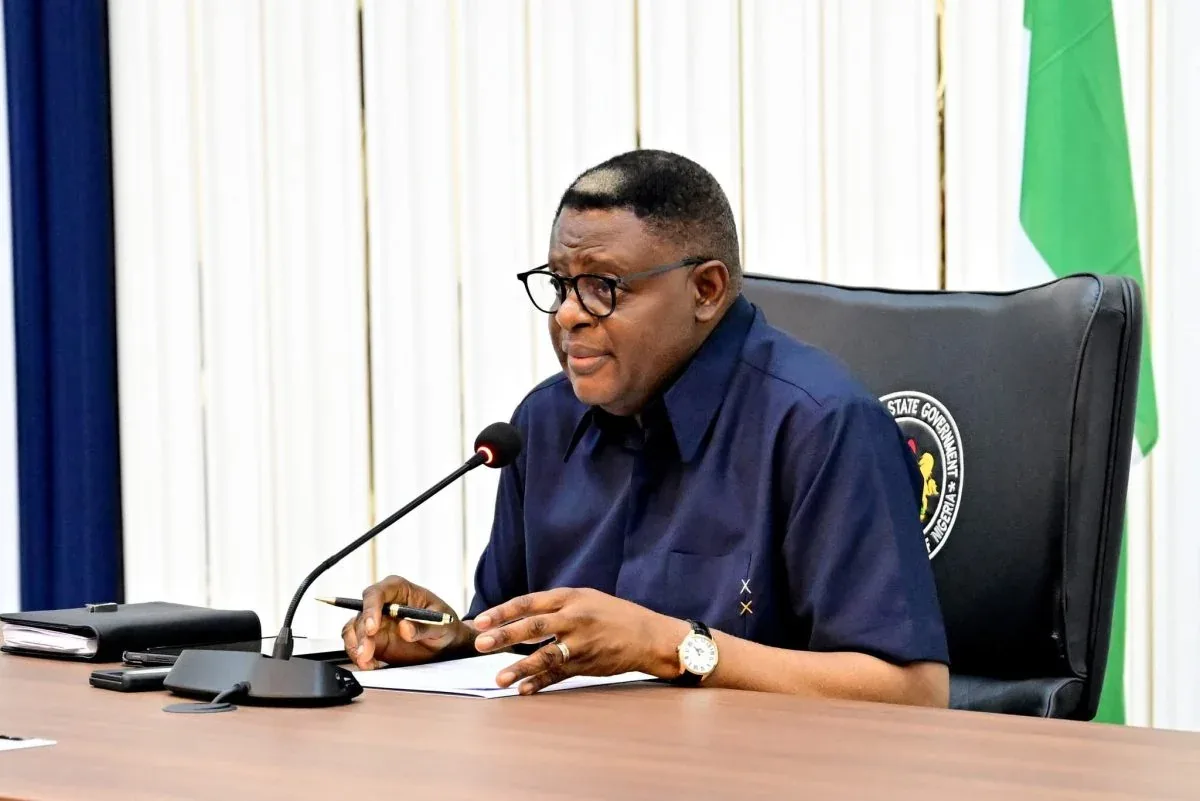
The governor made the remarks during the groundbreaking ceremony for the multi-billion-dollar project on November 13, 2026, in Bakassi Local Government Area. Vice President Kashim Shettima performed the ceremony on behalf of President Bola Tinubu.
According to Otu, his administration had completed key technical, environmental and administrative requirements ahead of the project’s implementation. These included an Environmental Impact Assessment and hydrographic, geotechnical and geophysical surveys.
He also disclosed that the project had secured Federal Executive Council approval, with an initial funding approval of $2.27 billion, and would be implemented through a Public-Private Partnership (PPP) arrangement.
The governor identified shipping, logistics, fishing, tourism, shipbuilding and regional trade as some of the sectors expected to benefit from the development. He added that the project’s economic opportunities would extend beyond Cross River to other parts of Nigeria and neighbouring countries.
Otu said the technical survey reports were completed and presented in July 2025, providing important information for the development of the port. He noted that the findings also qualified Cross River to participate in the international Seabed 2030 initiative, which seeks to improve the mapping of the world's ocean floor.
He further linked the survey findings to the Federal Government's adoption of updated navigational charts on October 1, 2026, replacing the historical 1903 charts used for maritime navigation in the area.
On local participation, the governor said his administration was determined to ensure that residents of Cross River benefit from the construction and eventual operation of the seaport.
He disclosed that selected indigenes were already undergoing specialised training to develop the technical skills required for different aspects of the project. The programme, he explained, would encourage knowledge transfer and prepare local workers for employment opportunities as construction progresses.
Otu also identified the state's airport, the proposed Bakassi Deep Seaport and the Lagos-Calabar Coastal Highway as critical infrastructure links that could improve transportation, facilitate cargo movement and strengthen the state's competitiveness.
He called on local and international investors, particularly those interested in maritime services and related industries, to explore the opportunities expected to emerge from the project.
The governor cited the state's investment support structures, including one-stop investment hubs and available incentives, as part of efforts to encourage private-sector participation.
He commended President Tinubu for supporting the project through the federal approval process, describing the groundbreaking as an important milestone in Cross River's ambition to become a major maritime destination.
The Bakassi Deep Seaport is expected to play a significant role in expanding Nigeria's maritime capacity and strengthening regional trade. However, its projected economic benefits will depend on successful financing, construction, supporting infrastructure and effective port operations.
Reporting by TalkNaijaMedia





Reader Comments (0)
No comments yet. Be the first to share your perspective on this report.