

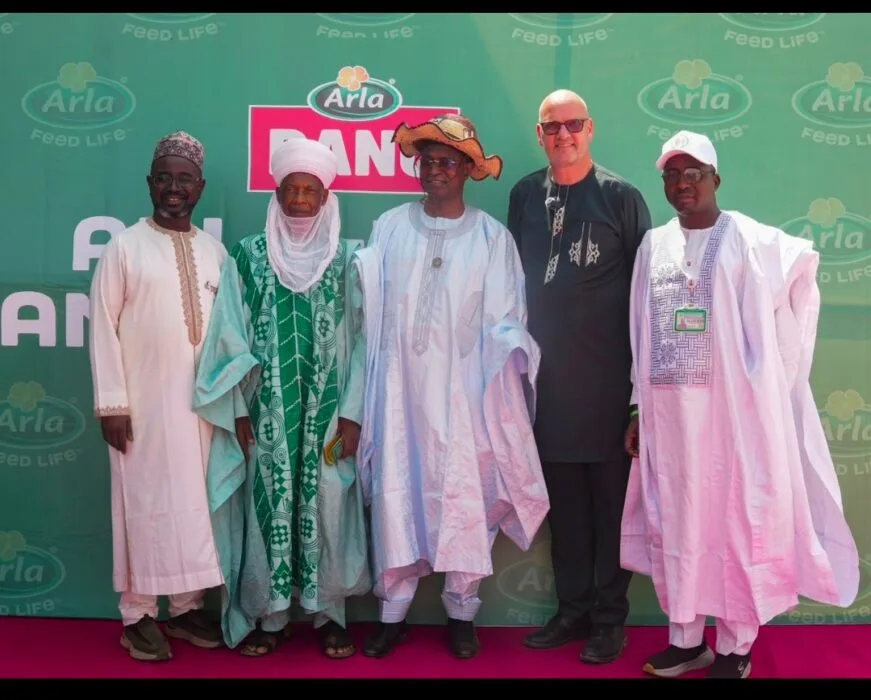
The programme featured guided tours of the farm, practical demonstrations and discussions on modern dairy operations, giving participants an opportunity to learn about improved livestock management and milk production.
More than 20 suppliers of dairy farming equipment, products and services also participated in the exhibition, providing an opportunity for farmers and other industry players to explore available technologies, exchange ideas and establish business connections.
Speaking at the event, Arla Foods Nigeria's Head of Corporate Affairs and Communications, Elele Ogunsanya, said the company's involvement in Nigeria's dairy sector goes beyond the production and sale of dairy products.
She explained that Arla's activities include developing local dairy farming capacity, improving farmers' skills, sharing technical knowledge and building partnerships that can support a stronger and more sustainable dairy value chain.
Ogunsanya added that investment in people, skills and local milk production would create long-term benefits for farmers, communities and the wider economy.
The Minister of Livestock Development, Alhaji Idi Mukhtar Maiha, also urged stakeholders to sustain the partnerships needed to expand Nigeria's dairy industry.
He said the country's ambition should include better access to nutritious food for children, improved earnings for farmers, stronger local supply chains for dairy processors and more employment opportunities for young people.
Maiha stressed that achieving these objectives would require consistent collaboration, responsible investment and practical initiatives that deliver measurable results.
A major highlight of the event was the presentation of Arla's proposed Kaduna State School Feeding Programme, designed to connect local dairy production with children's nutrition and create additional demand for locally produced milk.
Under the planned initiative, Arla intends to supply freshly produced yoghurt from its Damau farm to children in selected schools several times a week. The programme is expected to begin with a pilot phase and will be implemented in partnership with the Milk Value Chain Foundation.
Kaduna State Commissioner for Agriculture, Murtala Dabo, who represented Governor Uba Sani at the event, welcomed the initiative and reaffirmed the state government's commitment to supporting investments in the agricultural and livestock sectors.
Dabo said incorporating locally produced dairy products into school feeding programmes could provide a market for local farmers while supporting efforts to improve children's nutrition and educational outcomes.
He also highlighted the importance of policy stability, security cooperation and infrastructure in creating an environment where agricultural investments can grow.
The Damau Open Day provided another opportunity for Arla to demonstrate its approach to developing local dairy production through practical training, technology and collaboration with farmers and government institutions.
As Nigeria continues to pursue greater domestic milk production, initiatives such as the proposed Kaduna school-feeding pilot could help strengthen the connection between dairy farmers, processors, consumers and the education sector.
However, the programme's wider impact will depend on successful implementation, consistent supply and the ability to build sustainable demand for locally produced milk.
Reporting by TalkNaijaMedia





Reader Comments (0)
No comments yet. Be the first to share your perspective on this report.