

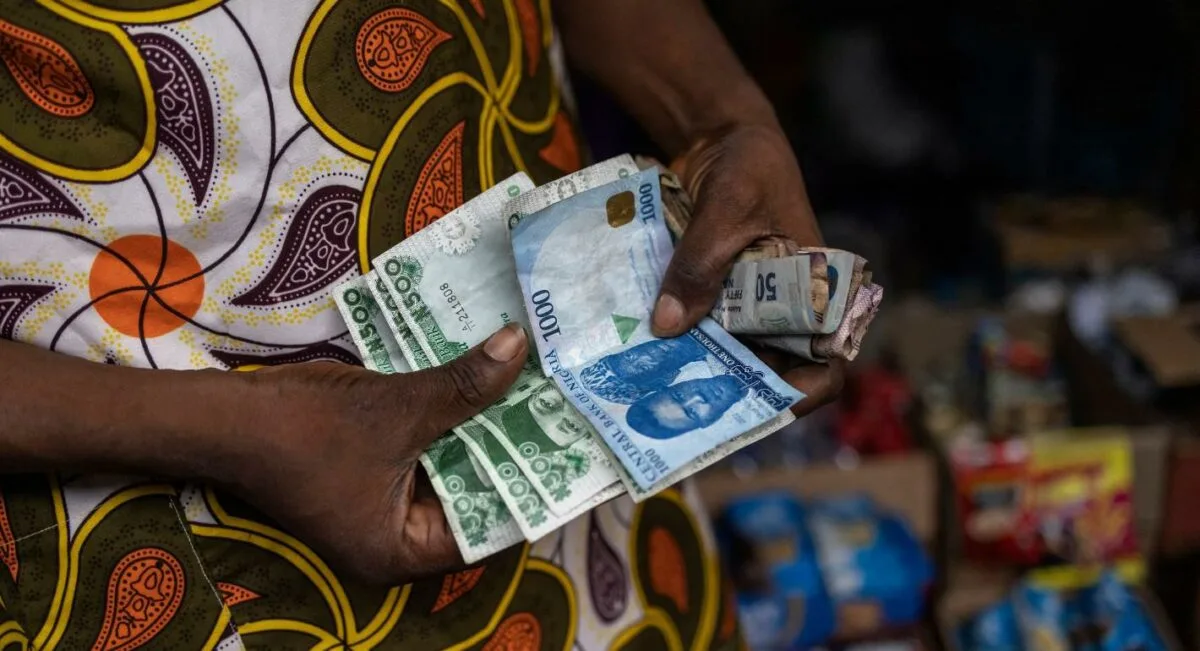
But changing business models, environmental policies, rising operating costs and government regulations have altered some of these familiar conveniences.
Here are seven examples of services Nigerians may now have to pay extra for, depending on the provider, location or circumstances.
1. House Inspection Fees
House hunting has become an increasingly expensive process for many Nigerians, and in some parts of the country, prospective tenants may be asked to pay before they can even inspect a property.
In Abuja, reports have documented inspection charges of between ₦20,000 and ₦30,000 in some cases. The fees are usually demanded by agents before taking prospective tenants to view available properties.
While inspection fees are not universal and not every estate agent charges them, the practice has become a notable additional cost for people searching for accommodation.
For many prospective tenants, this means spending money simply to see a property before deciding whether to rent it.
2. Shopping Bags
The days when customers could routinely expect a free nylon bag at the supermarket checkout are gradually disappearing, particularly in major Nigerian cities.
The change has been especially visible in Lagos following the state's enforcement of restrictions on single-use plastics. Major retailers have stopped routinely providing free plastic bags, while some charge customers for alternative or reusable bags.
BusinessDay reported in 2025 that some supermarkets were charging between ₦50 and ₦150 for carrier bags, while other retailers encouraged shoppers to come with their own bags.
The development is linked largely to efforts to reduce plastic pollution, although it means shoppers now have to factor the cost of packaging into some purchases.
3. Takeaway Packs
Another small expense that has become familiar to many restaurant customers is the charge for takeaway packaging.
Previously, customers who could not finish a meal could often ask for the remaining food to be packed without being charged separately. Today, some restaurants add the cost of the container to the bill.
Current restaurant menus in Nigeria show examples of separate charges for takeaway packaging, with some establishments listing plastic or foam packs as individual items.
The amount varies from one restaurant to another, but the principle is the same: customers may have to pay extra to take home food they have already purchased.
4. Some WhatsApp Business Services
WhatsApp itself remains free for ordinary users, and the WhatsApp Business app is also free to download. However, businesses using Meta's more advanced WhatsApp Business Platform operate under a different pricing structure.
Meta's terms state that businesses using the WhatsApp Business APIs are charged according to applicable rate cards and pricing rules. WhatsApp has also introduced paid business messaging features, including paid business broadcasts in some markets.
This distinction is important because the cost is generally a business expense rather than a direct charge to someone simply chatting with a business on WhatsApp.
For Nigerian companies that rely heavily on WhatsApp for customer service, marketing or commercial communication, these costs can therefore become part of their operating expenses.
5. Electronic Bank Transfers
Electronic transfers were once heavily promoted as a convenient way to encourage customers to embrace internet and mobile banking, but transfer charges have become a familiar part of banking in Nigeria.
The Central Bank of Nigeria's guide to bank charges provides for fees on certain electronic funds transfers, with charges depending on the transaction and amount. Its published schedule, for example, lists electronic funds transfer charges of ₦10 for transactions below ₦5,000, ₦25 for transactions between ₦5,001 and ₦50,000, and ₦50 for amounts above ₦50,000.
Actual charges can vary according to the applicable regulatory framework, banking channel and transaction type, so customers should check their bank's current tariff.
For millions of Nigerians making transfers every day, however, the small charges can add up over time.
6. Some HIV Care Services Have Historically Carried User Fees
This one needs an important clarification.
Nigeria's Federal Government introduced a free antiretroviral drug provision policy in 2006, and the National Agency for the Control of AIDS continues to state that HIV treatment remains free at government-owned health facilities.
However, free treatment has not always meant that every aspect of HIV care was completely free at every facility.
Research published on HIV programmes in Nigeria found that some facilities introduced user fees for consultations, laboratory investigations and other services during periods of funding pressure, even where antiretroviral drugs remained subsidised or free. One study of a major HIV clinic found that introducing user fees was associated with a substantial decline in patient enrolment and ART doses dispensed.
So, rather than saying Nigerians now generally pay for HIV treatment, it is more accurate to say that some patients have historically faced additional costs for parts of HIV care despite the continued policy of free treatment at government facilities.
7. Road Tolls
For years, motorists travelling on federal highways had to stop at toll gates and pay before continuing their journeys.
The Federal Government abolished toll collection on federal roads in 2004. However, tolling has since returned as part of a renewed federal road-financing strategy.
In 2021, the Federal Executive Council approved the reintroduction of tolling, and the Federal Government has subsequently commenced toll collection on selected corridors. The Abuja–Keffi–Akwanga–Makurdi highway, for example, has been among the routes brought under the renewed tolling programme.
The return of tolling does not mean every federal road or bridge now carries a toll. Instead, charges apply to designated routes and facilities under the government's tolling programme.
For motorists who remember the period when federal road toll gates disappeared, their return represents another example of an everyday travel cost that has come back into the picture.
From housing to banking, shopping and transportation, the cost of everyday life in Nigeria continues to evolve. Some charges are driven by private businesses, while others are connected to government policy, environmental concerns or changes in how services are delivered.
What was once considered a complimentary convenience is therefore, in many cases, becoming an expense that consumers now have to budget for.
Reporting by TalkNaijaMedia




Reader Comments (0)
No comments yet. Be the first to share your perspective on this report.