

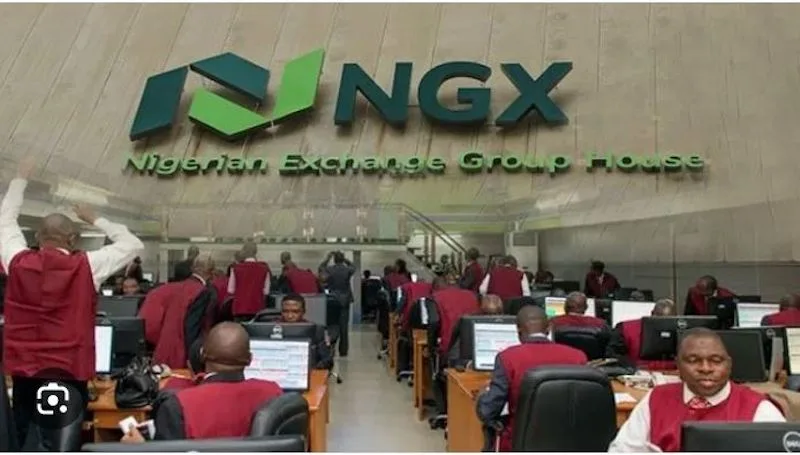
The companies, operating across telecommunications, banking, cement manufacturing, energy and other sectors, also recorded an estimated combined profit after tax of ₦7.6 trillion, representing a 22.1 per cent increase from the ₦6.2 trillion achieved in the same period last year.
Their performance comes against the backdrop of persistent economic pressures, including insecurity, high operating expenses, elevated borrowing costs and reduced consumer purchasing power.
However, some improvements in key economic indicators provided support for business activities during the review period.
Nigeria's inflation rate declined to 14.63 per cent in September 2026, compared with 15.15 per cent in December 2025, according to figures published by the Central Bank of Nigeria.
The naira also recorded relative stability in the foreign exchange market, closing September 2026 at approximately ₦1,331.50 to the dollar, compared with about ₦1,478 at the end of September 2025.
Despite these improvements, businesses continued to contend with higher energy costs, security concerns and uncertainties in the global economy.
The International Monetary Fund's October 2026 World Economic Outlook projected global economic growth of 3.1 per cent in 2026 and 3.4 per cent in 2027, reflecting continuing geopolitical and economic uncertainties.
An analysis of the unaudited financial statements of the 22 companies showed that MTN Nigeria recorded the highest profit before tax, followed by Dangote Cement and Seplat Energy.
MTN Nigeria posted a profit before tax of approximately ₦1.80 trillion during the nine-month period, representing a 59.4 per cent increase from ₦1.13 trillion recorded in the corresponding period of 2025.
The telecommunications company's strong performance was supported by increased service revenue, higher data consumption, subscriber growth and improved operational efficiency.
Its Chief Executive Officer, Karl Toriola, described the third-quarter performance as particularly encouraging, noting that the company had recovered from the temporary slowdown experienced in the second quarter.
According to him, service revenue increased by 23.7 per cent during the first nine months of 2026, while earnings before interest, taxes, depreciation and amortisation (EBITDA) rose by 36.8 per cent to ₦2.6 trillion.
MTN also recorded a 56.9 per cent EBITDA margin during the period, reflecting improved profitability.
The company attributed its growth largely to increasing subscriber numbers, stronger data adoption, higher usage and rising demand for home broadband services.
Its fintech business also recorded significant progress, with core mobile money revenue increasing by 102.2 per cent.
Dangote Cement emerged as the second-largest profit contributor among the three leading companies, reporting ₦1.47 trillion in profit before tax for the nine months ended September 2026.
The figure represents a 41.5 per cent increase from the ₦1.04 trillion recorded in the corresponding period of 2025.
The cement manufacturer's revenue also increased by 19.6 per cent to ₦3.77 trillion, while profit after tax rose by 31.2 per cent to a record ₦974.8 billion.
Chief Executive Officer of Dangote Cement, Arvind Pathak, attributed the company's performance to increased sales volumes, wider market reach and disciplined execution of its business strategy.
He said the company would continue to prioritise production growth, cost management, regional expansion and strategic investments as it entered the final quarter of the year.
Seplat Energy Plc also recorded strong financial growth, reporting a profit before tax of approximately ₦1.34 trillion, representing a 52.75 per cent increase from ₦878.99 billion recorded in the corresponding period of 2025.
The energy company's performance was supported by improved production, stronger oil prices and increased revenue during the review period.
Its revenue rose to ₦3.78 trillion from ₦3.36 trillion, while profit after tax increased to approximately ₦355.6 billion from ₦146.6 billion.
The strong results from the three companies reflect the growing contribution of major listed businesses to Nigeria's corporate earnings, even as operating conditions remain challenging.
Commenting on the performance of Nigerian companies, investment banker and stockbroker Tajudeen Olayinka said the improved profit figures reflected positive developments in some of the country's economic indicators.
He explained that businesses had demonstrated resilience by adjusting to rising operational costs, including increases in petrol and diesel prices.
According to him, some companies were able to transfer part of the additional costs to consumers through higher prices, which helped protect their earnings.
Olayinka maintained that Nigerian businesses had continued to demonstrate the capacity to operate and generate profits despite inflationary pressures, high interest rates and security-related challenges.
The latest financial results highlight the ability of major Nigerian companies to sustain earnings growth amid economic uncertainty.
However, the sustainability of the improved performance will depend on continued macroeconomic stability, lower operating costs, improved purchasing power and access to affordable financing.
Reporting by TalkNaijaMedia




Reader Comments (0)
No comments yet. Be the first to share your perspective on this report.